
Last Updated on February 12, 2025 by Brian Beck
Walking on your lawn you feel like you are walking on a mattress. Spongy is the word that comes to mind. Your lawn takes a lot of water to stay alive during the summer, often resulting in lakes of water. You have lawn disease break out once or twice per years and you have probably lost an area or two in the last winter or two and you are beside yourself. Your lawn care company can’t help you and have told you to power rake your lawn because they don’t do that. You are so frustrated about the whole ordeal that you are contemplating replacing the lawn just to start over as that you think would solve the issue. You have no idea what to do.
What I have described above is a failure of the system that most people are engaged in and the lack of solutions that are provided by so called experts that do not and cannot solve the problem because they are ill-equipped to do so as what they are providing as a service is in reality aggravating the situation by creating the condition that is causing, perpetuating and managing the symptoms of the problem that has been created by misunderstanding the reality of the foundation of the problem that is both the issue and the solution.
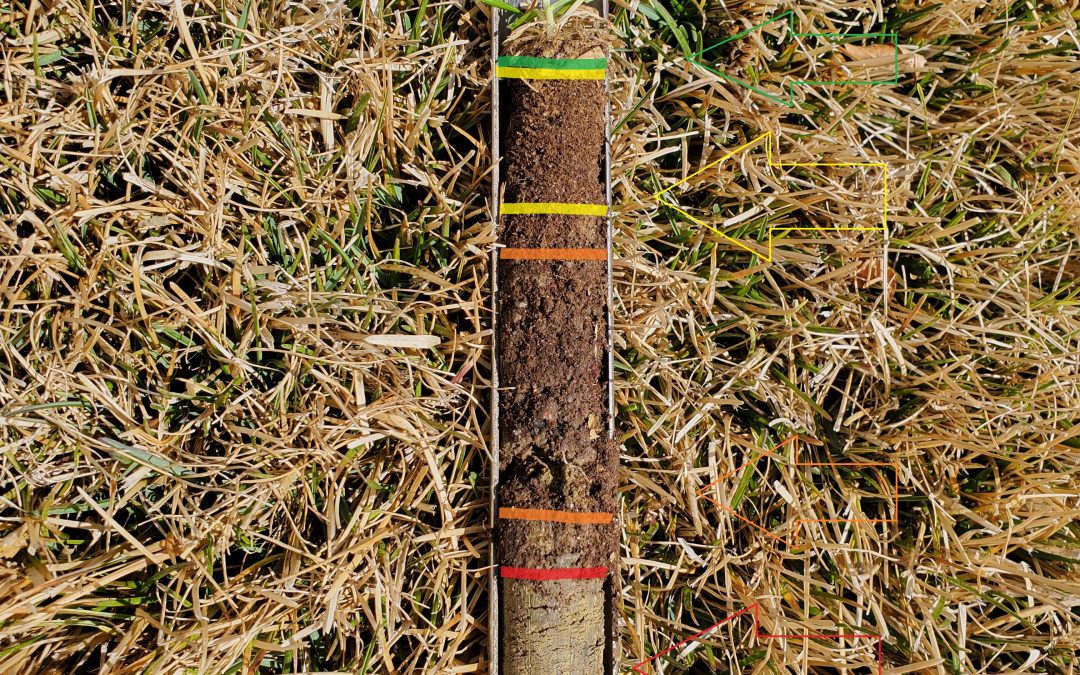
The sponge that you are feeling is called thatch by the way, and it is normal to a degree. Thatch is defined as the accumulated root growth that sits on top of the soil just below the live grass. Under normal circumstances it should be in between .25″ and .5″. It serves as both a moisture and thermal barrier for the soil and roots. The problems begin when it becomes too thick which prevents the penetration of resources such as air, water and nutrients. This restriction, aside from creating waste which translates into expense turns into a cascading effect of failure. Water which is the biggest expense typically evaporates before it gets into the soil and the prevention of air, specifically oxygen to the roots drives anaerobic conditions that drive pathogenic conditions that lead to fungal outbreaks of lawn disease both in the soil and on the grass blades. This is especially aggravated after applications of synthetic nitrogen which is like rocket fuel for pathogenic microbes. As the resources cannot get to the roots, the roots adapt by growing upward compounding the issue (here is the snowball effect). What is ultimately left is a turf that is growing on the surface rather than in the soil which becomes a prime candidate for winterkill as the roots dry out from exposure over the long dry winters that we can sometimes have. This can also coexist with soil pathogens that can leave pock marks on the surface in the shape of rings or crescents. One spring you discover that your lawn looks like a World War I landscape that is not only ugly but an expensive prospect to say the least.
Here is what is occurring, or some combination: a highly alkaline soil (pH), with low soil (beneficial) microbes due to synthetic fertilizer and pesticide use, with low organic matter and a low sulfur presence has allowed the thatch to accumulate precipitating the cascade effect described previously. It is predictable and once it is over .75″ it becomes a nightmare that can take years to fail as you are bled dry in expenses mitigating the symptoms rather than correcting the problem which has everything to do with the soil and some poor enabling practices which are advancing the problem.
The solution: STOP using synthetics immediately, get a soil test with a biological focus, get it interpreted by someone who knows the biological method, take action which involves addressing the pH, applying massive amounts of carbon and biology (microbes) and any deficient macro or micro elements. This will essentially launch a biological system and will in time digest the thatch back into the soil and correct every war crime that has ever occurred to your lawn.
If this describes your plight and you need a solution feel free to reach out to us. If you want to learn more about the biological method, read more here: https://www.springslawns.com/our-biology-program-explained/