
Last Updated on July 21, 2025 by Brian Beck
What is Carbon and How Does it Benefit Your Soil?
When people think of carbon, they often picture smokestacks or tailpipes—but beneath your feet, carbon plays a much different role. In fact, it’s the foundation of a healthy, living soil system. Understanding what carbon is, where it comes from, and how it affects your soil is key to building a resilient, vibrant lawn or landscape that thrives naturally—with less water, fewer chemicals, and better long-term results.
What Is Carbon?
Carbon is a chemical element—the building block of life. All living things are made of carbon, including the plants in your yard and the microbes beneath the surface. In soil, carbon primarily exists in organic matter: decomposing plant roots, leaves, mulch, compost, and the living microbes that break them down.
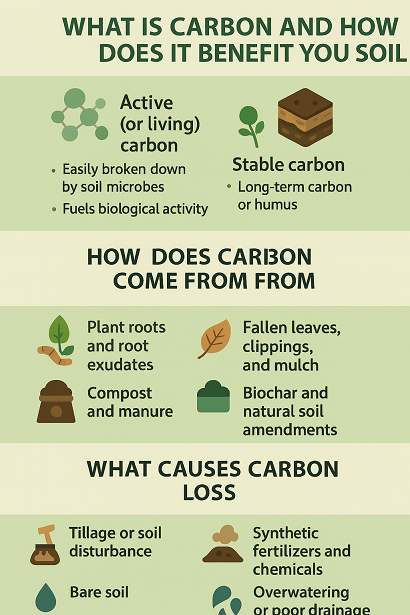
There are two major forms of carbon in the soil:
-
Active (or labile) carbon – Easily broken down by soil microbes; it fuels biological activity.
-
Stable carbon – Long-term carbon, also known as humus, that helps hold nutrients, moisture, and improve soil structure.
How Does Carbon Benefit Your Soil?
Soil carbon isn’t just “dirt with more stuff in it”—it’s the engine of fertility. Here’s how carbon benefits your soil:
1. Feeds Soil Life
Carbon is food for soil microbes. These tiny organisms break down organic material and make nutrients available to plants. A carbon-rich soil has a thriving microbial community that supports healthier plants.
2. Improves Water Retention
Organic matter acts like a sponge, holding moisture and releasing it slowly over time. Even a 1% increase in soil organic matter can improve water-holding capacity by 20,000 gallons per acre.
3. Enhances Nutrient Availability
Carbon improves your soil’s ability to store and exchange nutrients (cation exchange capacity). It keeps essential elements like nitrogen, potassium, and phosphorus available for plant roots.
4. Builds Soil Structure
Stable carbon helps form soil aggregates—clumps of soil that create pore space for air, water, and roots. This reduces compaction and erosion while encouraging deep root growth.
5. Buffers Soil pH and Detoxifies
Carbon can buffer excess nutrients or toxins, reducing salt buildup and improving plant tolerance to stress. It’s like having a natural filter underground.
Where Does Soil Carbon Come From?
Soil carbon comes from plant life, both living and dead. Sources include:
-
Plant roots and root exudates (sugars excreted by roots to feed microbes)
-
Fallen leaves, clippings, and mulch
-
Compost and manure
-
Dead microbes and decomposing organisms
-
Biochar and natural soil amendments
The process is simple: plants capture carbon from the atmosphere through photosynthesis and return it to the soil through roots and organic residue. This is nature’s version of carbon recycling—and your soil is the beneficiary.
What Causes Carbon Loss?
Unfortunately, many common practices strip carbon from the soil, leaving it biologically inactive and dependent on synthetic inputs. Here’s what causes carbon depletion:
1. Tillage or Soil Disturbance
Tilling or aerating disrupts microbial communities and exposes organic matter to oxygen, rapidly oxidizing it into CO₂ and releasing it into the atmosphere.
2. Synthetic Fertilizers and Chemicals
High doses of synthetic nitrogen disrupt microbial balance and reduce the need for plants to interact with microbes. Over time, this weakens the natural carbon cycle and degrades soil life.
3. Bare Soil and Erosion
Exposed soil loses carbon quickly through erosion and oxidation. Keeping the soil covered with plants, mulch, or cover crops protects it from these losses.
4. Over-Watering or Poor Drainage
Waterlogged soils can lead to anaerobic (low oxygen) conditions, slowing microbial activity and carbon cycling.
5. Excessive Mowing or Scalping
Removing too much plant tissue at once reduces carbon input from roots and above-ground biomass. Carbon needs steady contributions—not sudden shocks.
The Bottom Line
Soil carbon is more than a buzzword—it’s the foundation of fertility, water efficiency, and long-term landscape health. When you build carbon, you build soil. And when you lose carbon, you lose the very life in the soil that makes plants thrive.
If you’re tired of the cycle of synthetic fertilizers, heavy irrigation, and stressed-out turf, it’s time to start thinking biologically. Carbon is the currency of the soil—and it pays dividends.
Want to boost carbon in your soil? Start by minimizing chemical inputs, reducing compaction, adding compost, and implementing a biological fertility system that works with nature—not against it.
Let the soil come alive again.