
Last Updated on February 10, 2025 by Brian Beck
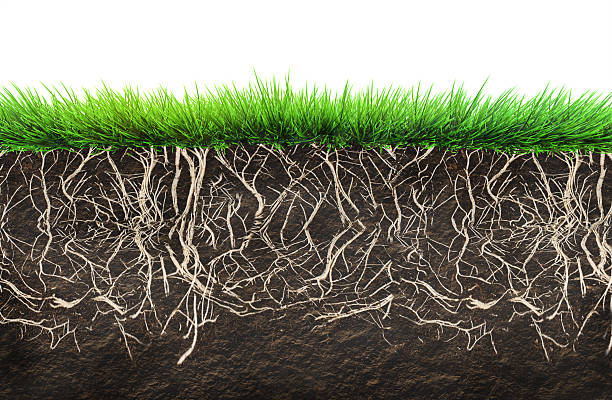
Have you ever seen a lawn green up the last week of March/first week of April? Without having applied any nutrients on it? Chances are you have not, ever. What is the significance of this happening and how does it happen? I am getting ahead of myself, let me explain this from the beginning. Soils tend towards compaction, that is normal but healthy soils do not remain compacted. So how do soils become uncompacted? Well, for a lot of people they resort to core aeration but that is a man made means of mitigation. How does it occur naturally? In a natural soil that has not been contaminated by synthetic products, it is managed by the microbial life. They do this by secreting a glue like substance called glomalin that creates soil aggregates that get formed and dissolve every few weeks. This is most visible with fungi as a healthy soil will look like cottage cheese with healthy populations. Bacteria does this as well on a much smaller less visible scale. This churning of the soil and the movement of all the life in the soil such as nematodes and earthworms as well as the life cycle of the root structure creates micro voids in the soil that naturally allows air, water and resources into the soil and to the roots in a much more rapid manner. This combined with an increased carbon level in the soil which increases water carrying capacity and serves as a fuel source for the microbes allows the soil to develop enough microbes to repair the soil. As the soil improves and the soil becomes more healthy it will be more porous. In the spring as the air temperature increases the air will penetrate the soil more readily, bringing the microbes out of dormancy, transferring nutrients into the plant which is beginning to transpirate and photosynthesize. Because a well hydrated soil that allows resources in more readily is efficient and will begin to cycle nutrients already in the air and the soil and place them into the root. This is maintained even more so in the growing season by a development of nitrogen fixing bacteria that feed the plants nitrogen out of the sky (N²) and convert them into a form that the plant can use (NO3) Nitrate, free fertilizer! Healthy lawns can green up much earlier that other lawns. Don’t worry about this speeding up the grass growing as healthy lawns grow very consistently and do not spike as they do with synthetic fertilizers.
For more information read our blog on this at:
https://www.springslawns.com/siren-song-of-synthetics
For more information, call us at 719-380-0136