

David vs. Goliath: The Fight for the Soul of Small Business in America
In every town across America, from the rustling plains of Kansas to the sunbaked sidewalks of Arizona, a quiet war is raging. It’s not fought with swords or slingshots, but with spreadsheets, buyouts, and bottom lines. And like the ancient tale of David and Goliath,...
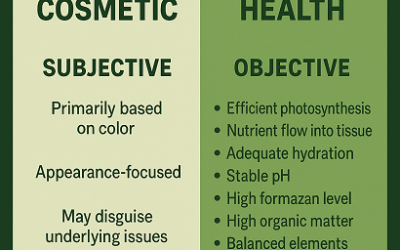
The Myth of the Green Lawn: What True Health Really Means
For decades, the picture of a “perfect” lawn has been painted with one brushstroke: green. To many homeowners, if their lawn is emerald from fence line to sidewalk, it must be healthy. But here’s the truth: color alone is one of the most deceptive and misleading...

Natural Soil Aeration with Microbes: How It Really Works
When most people think of aeration, they picture a machine punching holes into the ground. While that approach can have short-term benefits, it’s actually a mechanical band-aid for a much deeper issue. True and lasting aeration happens naturally—through the work of...
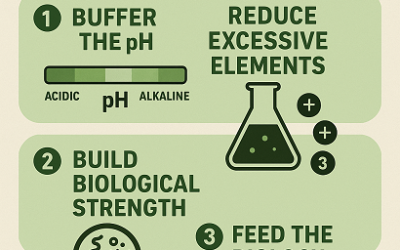
What It Takes for a Lawn to Become Balanced
Most people assume that achieving a healthy lawn is as simple as throwing down some fertilizer or watering more often. In reality, a truly balanced lawn is not the result of a quick chemical reaction but a process—a careful sequence of soil correction, buffering, and...
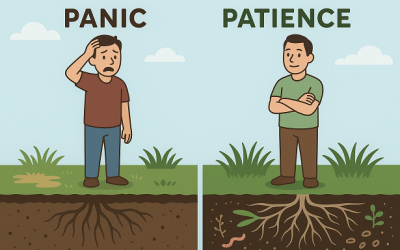
Calming Lawn Anxiety: Why It’s Not as Bad as It Looks
If you’ve ever walked out into your yard, noticed a patch of brown, thinning grass, or even a whole section that seems “off,” you’re not alone. Many homeowners feel a wave of anxiety when they see their lawn struggling. The good news? Almost every lawn problem is...

Nutrient Flow Efficiency: The Future of Lawn Care
Most people think about lawn care in terms of fertilizer. Spread a bag of product, water it in, and hope the grass greens up. For decades, that’s been the standard approach. But in reality, fertilization as we know it often misses the bigger picture. That’s why we’re...

Mediocre Lawns Are Expensive
The Hidden Cost of Ownership: Why Your “Average” Lawn May Be the Most Expensive One on the Block When most homeowners think about lawn care, they picture two extremes: the perfectly manicured golf course fairway and the average-looking, “good enough” lawn they already...

When Topdressing Your Lawn Backfires
Topdressing a lawn with compost sounds like a natural, beneficial practice. The idea is simple: spread organic matter across the lawn to improve soil structure, feed microbes, and boost fertility. But here’s the catch—if your compost isn’t fully digested and...
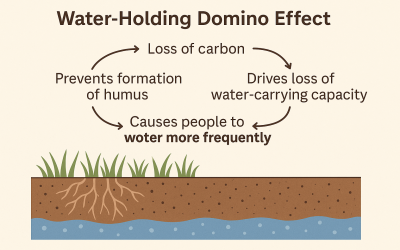
Why We Waste Water – And How Soil Carbon Holds the Answer
When most people think about water waste in lawns, their minds jump straight to sprinklers running at the wrong time of day, broken irrigation heads, or neighbors who water sidewalks instead of grass. While those things are certainly part of the problem, the real...
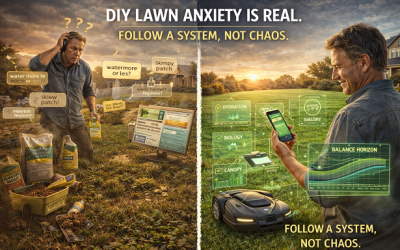
DIY Lawn Anxiety Is Real — Here’s the System That Ends the Guessing
Because the real problem isn’t your lawn… it’s the constant uncertainty. If you take care of your own lawn, I already know what you’ve felt. That quiet stress when you walk outside and notice something “off.”A patch that looks thinner. A color shift. A weird spot. A...

The Hidden Truth: Mowing Is a Data Problem
And the people still treating it like “labor” are about to get left behind. Most people think mowing is simple. Grass grows. You cut it. End of story. That’s how it looked for decades—because the only tool we had was brute force: gas, noise, time, sweat, and a weekend...

The Quiet Lawn Revolution
Less noise. Less fuel. Better turf. More peace. Most people think a “nice lawn” is a cosmetic thing. I think it’s something bigger: a quality-of-life upgrade. Because if your lawn requires gas, noise, weekend sacrifice, constant inputs, and a small cloud of stress…...