Last Updated on July 29, 2025 by Brian Beck
When summer hits its stride and temperatures soar, your lawn feels it just as much as you do. That once-lush green carpet can quickly become dull, brittle, and stressed under the intense heat. But heat stress doesn’t mean defeat—it just means your grass needs some help adapting. Here’s what’s really going on when the mercury rises and what you can do to help your lawn not just survive, but thrive.
What Heat Does to Grass
-
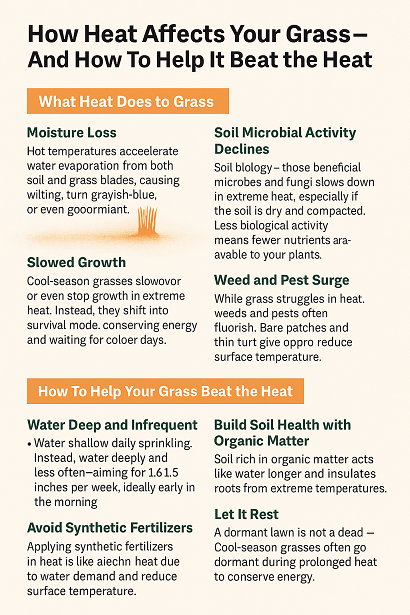
Moisture Loss
Hot temperatures accelerate water evaporation from both the soil and the grass blades. As the grass loses more moisture than it can take up from the roots, it begins to wilt, turn grayish-blue, or even go dormant.
-
Slowed Growth
Cool-season grasses (like bluegrass, ryegrass, and fescues) slow down or even stop growing in extreme heat. Instead, they shift into survival mode, conserving energy and waiting for cooler days.
-
Soil Microbial Activity Declines
The heat doesn’t just affect what’s above the ground. Soil biology—those beneficial microbes and fungi that help feed your grass—slows down in extreme heat, especially if the soil is dry and compacted. Less biological activity means fewer nutrients available to your plants.
-
Weed and Pest Surge
Ironically, while your grass struggles in the heat, weeds and pests often flourish. Bare patches and thin turf give opportunistic invaders the opening they need to take over.
How to Help Your Grass Beat the Heat
1. Water Deep and Infrequent
Skip the shallow daily sprinkling. Instead, water deeply and less often—aiming for 1 to 1.5 inches per week, ideally early in the morning. This encourages roots to grow deeper, making your grass more drought- and heat-tolerant. Remember: roots follow water.
2. Build Turf Density
A dense lawn is its own best defense. Thick turf shades the soil, helping to retain moisture and reduce surface temperature. The more blades of grass per square inch, the more resilient the lawn is to heat and weed pressure. Achieve this through regular overseeding, proper nutrition, and minimizing compaction. Don’t just focus on height—focus on volume.
3. Avoid Synthetic Fertilizers
Applying synthetic fertilizers in the heat is like feeding a fever. These salt-based products demand water and can burn the lawn if not watered in deeply. Worse, they push unnecessary top growth at a time when the plant is trying to focus on survival.
4. Build Soil Health with Organic Matter
Soil rich in organic matter acts like a sponge, holding water longer and insulating roots from extreme temperatures. Apply compost, mulch your clippings, or better yet—embrace a biological fertility program that feeds the soil life, which in turn feeds your plants.
5. Let It Rest
Sometimes the best move is to do nothing. A dormant lawn is not a dead lawn. Cool-season grasses often go dormant during prolonged heat to conserve energy. As long as the crown of the grass is alive, it will bounce back when conditions improve.
6. Shade Strategically
Planting trees or strategic shrubs can offer dappled shade that reduces soil temperatures and wind exposure, helping your turf retain more moisture without completely blocking sunlight.
Heat is a Challenge, But Not a Death Sentence
Grass is resilient. With the right care, it can endure even the toughest summer conditions. By working with nature—rather than against it—you can build a lawn that’s not only more heat-tolerant but healthier all year long. The key is understanding what your grass needs when the thermostat spikes and taking steps that support its natural processes.
So, when the heat cranks up, don’t panic. Water smart, build density, feed the soil—not the grass—and let nature do the rest.