Last Updated on July 7, 2025 by Brian Beck
If you have a problem with your thatch or if you think you have a problem with your thatch listen up.
First, let’s define what that is because there’s a lot of misconceptions about what it is and what it does to your lawn and what role it plays.
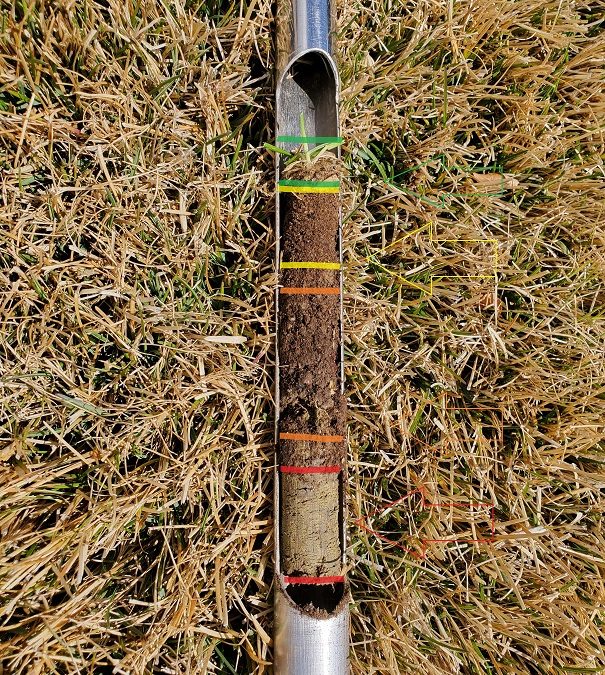
Bluegrass lawns, which are the prevalent grasses along the Front Range are inherently thatch type lawns, which means that they accumulate a dead layer of root growth on top of the soil underneath the living grass that you see on top.
This is quite normal and to be expected, however there’s a catch. The thatch should only be at most about 1/2 an inch in thickness, anything more and it causes problems.
The thatch level serves as a moisture and thermal barrier protecting the grassroots underneath. A healthy level allows air, water, and nutrients to penetrate the soil and get to the roots efficiently.
The thicker your thatch becomes, the more problems you’re going to experience getting these resources to the roots. In an extreme scenario it can completely prevent water and air from getting to the roots which causes the roots to grow upwards trying to access resources. The lawn can also go anaerobic and trigger pathogenic microbes that cause disease such as necrotic ring.
Most of the time this goes unnoticed, and the expenses begin to mount, typically as exorbitant water bills as most of the water simply evaporates into the sky leaving a shallow root structure that causes other problems.
So, there’s a solution however! And that solution is our biological process which can be used to digest organic matter back into the soil rather than using mechanical infiltration which is extremely stressful on the lawn and can cause other problems as well as not solving the root issue which is a dead soil from a lack of microbial life.
We can solve this problem much more efficiently without any disturbance of your lawn and do this practically anytime during the growing season. The secret weapon, Mycorrhizal Fungi, Tiny microorganisms that digest organic matter from the soil and return it of usable nutrients to the plant it surrounds.
These organisms are mostly active when it is cooler out in the early spring and early fall which gives us a couple of windows and this to operate beforehand where we can develop the biology to do the deed.
As you know, we’ve stopped doing power raking back in 2020 after we deemed it too expensive to do properly and also concluded that it was not solving the problem as the same customers would have us return to power rake their yard every few years. Once you empower the biology to take control of the soil you will never have this problem ever again!
So, if you want to save some money and you have thick thatch you have nothing to lose. Let us help you chew that back down into the soil and get your lawn one step closer to efficiency!