

Synthetic vs. Biological Lawns: Two Worlds, Two Outcomes
Most people don’t realize this, but there are really two lawn-care universes operating in America today. One is the traditional, synthetic-heavy universe — the world of quick fixes, chemical crutches, and a lawn that always “needs something” to look decent.The other...

When Do We Arrive? Understanding the Journey to a Healthy Lawn
A few years ago, I had a customer named Dan who asked me a question that has stuck with me ever since. Before I knew all that I know today about our biological lawn program, Dan looked at me and said, "Hey Brian, when do we arrive?" At the time, I didn't have all the...

Your Lawn Is Thirsty… But Sure, Let’s Pretend It Can Sip Air
Let’s talk about soil hydration — or as I like to call it: the annual ritual of ignoring every warning and then acting shocked when the lawn dies in spring. Because apparently, somewhere out there, a rumor started that grass can photosynthesize regret and hydrate...
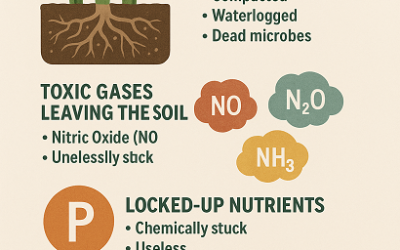
When Synthetic Fertilizers Go Bad: What Really Happens in an Anaerobic Lawn
Most people think fertilizer is just “plant food.”Spread it on the lawn, water it in, and everything gets greener… right? Not exactly.When your soil becomes anaerobic—meaning it runs out of oxygen—synthetic fertilizers don’t just stop working.They actually break down...
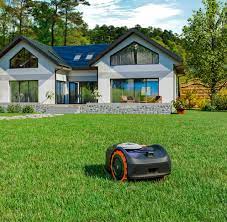
The Trinity System: The Lawn Revolution Most People Aren’t Ready For — But You Might Be
If you’re tired of spending way too much money on a lawn that still struggles, then what you’re about to read is going to feel like discovering the cheat code everyone else is missing. Because starting in 2026, we’re offering something no one in the lawn industry has...
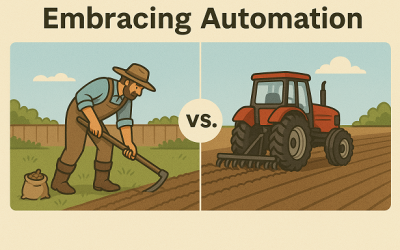
Embracing Automation: From Tractors to Robotic Mowers
The Power of a Single Innovation Imagine being a farmer in the early 1900s, planting one acre of crops by hand — 40 hours of labor per acre. Then along came the tractor. In one fell swoop, that job dropped to less than an hour. The landscape of agriculture changed...
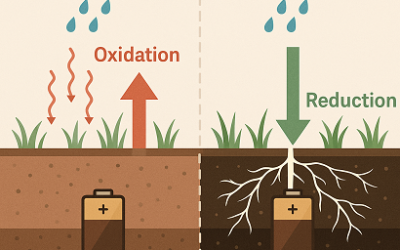
Why Shallow Watering May Be Costing You More Than You Think (aka. How You Are Probably Your Own Worst Enemy)
💧 1. The Biological Engine: Carbon and Oxygen Balance Soil carbon — humus, microbial biomass, and root exudates — is the fuel microbes burn to generate energy (CO₂, enzymes, organic acids, etc.).For that carbon to build up rather than burn off, two things must stay in...
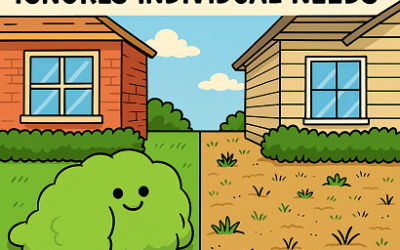
The Danger of Blanket Advice in Lawn Care
The Danger of Blanket Advice in Lawn Care For decades, lawn care has been guided by blanket advice — the kind that tells every homeowner, in every zip code, with every type of soil, to “fertilize four times a year,” “water twice a week,” or “mow high.” It’s the same...

How Guano Islands, German Soldiers and American Farmers Are All Related
From Bird Poop to the Haber-Bosch Revolution: How Guano Shaped the Modern Fertilizer Trap In the mid-1800s, a curious white gold rush swept the globe — and it wasn’t for metal, it was for bird poop. Islands off the coast of Peru were piled high with guano — seabird...

From Scarcity to Abundance: Rethinking Grass in Colorado’s High Plains
A Blade to Blade / biological lawn-care perspective A dead landscape is not morally superior. A rock yard is not automatically responsible. A lawn is not automatically wasteful. The difference is management. There is a phrase I hear all the time from people who...
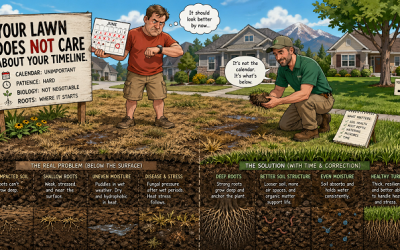
Your Lawn Does Not Care About Your Timeline
There is a hard truth about lawn recovery that most homeowners do not want to hear: A struggling lawn does not recover because we are frustrated. It recovers when the actual causes of failure are corrected. That may sound blunt, but it is also liberating. Because once...

The Most Expensive Lawn Is the One That Almost Works
Why a “pretty good” lawn may be quietly draining your wallet There is a lawn that is easy to recognize once you know what to look for. It is not completely dead.It is not a total disaster.It is not the neighborhood embarrassment. In fact, from the street, it may even...