

Weeds: The Soil’s Silent Messengers
When most people see weeds, they see a nuisance. But in reality, weeds are nature’s way of sending a message — a biological signal about what’s going wrong beneath the surface. Every weed species has its preferred conditions: compacted soils, high or low pH, poor...
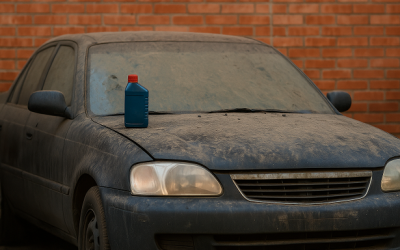
The Neglected Car and the Neglected Lawn
Imagine owning a car that’s been neglected for years. Oil changes missed. Filters dirty. Tires bald. It still runs—but barely. Every trip to the mechanic costs a little more. Parts wear out faster. Mileage drops. Eventually, the cost of keeping it on the road starts...

Mowing Has Become a Time Trap: But It Doesn’t Have to Be
For 26 years now, I’ve been running Blade to Blade Lawn & Landscape here in Colorado Springs, Colorado. Over the past seven years, I’ve noticed a real trend emerging—something that’s reshaping how we think about mowing our lawns. And that’s the growing interest...

Why Traditional Lawn Care Misses the Mark: Soil, Water, and Mowing in a New Light
For a long time, the way we’ve all been taught to care for our lawns has been pretty straightforward and, let’s face it, a bit outdated. But now, with a better understanding of biology and new technologies, it’s clear that the old methods are costing us more than they...
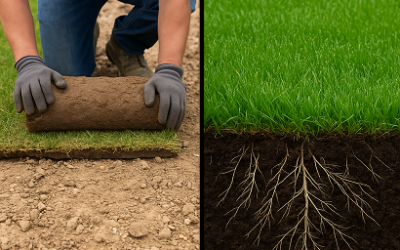
Why Replacing Your Grass Won’t Fix Your Lawn (And What Will)
When it comes to lawn care, it’s easy to fall into the trap of quick fixes. One of the most common misconceptions I’ve encountered is the belief that you can solve deep-seated lawn issues just by ripping out the grass and laying down new sod. It sounds logical on the...
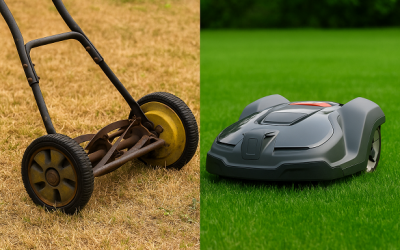
From Tradition to Tech: How Robotic Mowing and Biological Lawn Care Are Changing the Game
For decades, lawn care has been driven by habit more than science. Gas-powered mowers, synthetic fertilizers, and weekly mow-and-blow services have defined the industry. But just because something has been done for generations doesn’t mean it’s the best way forward....

I Got Roasted Recently in a Chat Forum: When Watering Advice Meets Soil Science
Knowing Your Audience and Understanding Soil Differences Recently, I found myself in an online discussion about watering practices for lawns. The article someone had posted advocated for frequent and shallow watering—a method that’s pretty much the opposite of what I...

Tradition, Habit, and the Ham That Was Too Big
There’s an old story about a woman who always cut the ends off her ham before putting it in the oven. When asked why, she replied, “Because that’s how my mother did it.” Curious, she asked her mother. The mother shrugged and said, “That’s how my mother did it.”...

Managing Symptoms vs. Solving Problems: Why the Synthetic Fertility Model Fails Lawns
For decades, the lawn care industry has been dominated by the synthetic fertility model. Bags of chemical nitrogen, potassium, and phosphorus have been sold as the answer to every yellow spot, every weed outbreak, and every patch of slow growth. But here’s the truth:...
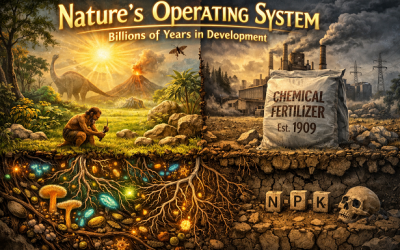
The “Biological Program” Isn’t New — It’s Just Not Convenient for a Bag Company
Somewhere along the way, modern lawn care started acting like biology is a trend. Like microbes are a new invention. Like carbon is a “premium add-on.” Like nature was just sitting around for a few billion years, waiting for a 3-number label on a bag to show up and...

Weeds Don’t Attack Lawns—They Audit Them
And the fastest way to lose the “war” is to fight the symptom instead of fixing the invitation. If you’ve ever looked at a lawn that’s suddenly full of weeds and thought, “They’re taking over,” you’re not wrong about the outcome—but you’re slightly wrong about the...

The Personality Types We’re Not Looking For (And Why That’s a Good Thing)
Here’s a truth most lawn companies are afraid to say out loud: We are not trying to serve everybody. If you want the cheapest, fastest, most convenient “spray-and-pray” plan in town… there are a hundred options for you. If you want a lawn program built on...