
Last Updated on July 24, 2025 by Brian Beck
Nitrogen is an essential building block of life—integral to amino acids, proteins, and nucleic acids—yet despite making up roughly 78% of Earth’s atmosphere as N₂ gas, it remains largely inaccessible to plants and most organisms. For centuries, agriculture depended on finite, natural sources of reactive nitrogen—namely animal manure, crop residues, and deposits of nitrate-rich minerals like Chilean saltpeter and bird guano. By the late 19th century, burgeoning global populations and expanding agriculture had begun depleting these natural reserves, threatening food security. The invention of a method to synthesize reactive nitrogen from atmospheric N₂ marked one of humanity’s most consequential scientific breakthroughs, reshaping societies, ecosystems, and the trajectory of civilization.
The Quest for Reactive Nitrogen
Before the early 20th century, farmers relied on organic cycling of nitrogen: animals ate plants, excreted manure, and that manure returned nitrogen to fields. Mineral sources supplemented this cycle—peru’s vast nitrate beds and islands rich in guano were extensively mined—but these supplies were geographically limited and politically fraught. By the 1890s, Europe’s agricultural output was constrained by a “fixed nitrogen” shortage. Chemists sought a way to break the triple bond of atmospheric N₂ (one of the strongest in chemistry) and convert it into ammonia or nitrates usable by plants.
Fritz Haber’s Breakthrough
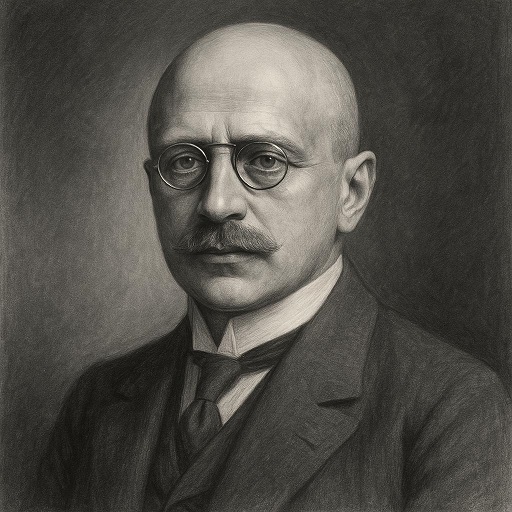
In 1909, German chemist Fritz Haber achieved the first laboratory synthesis of ammonia by reacting nitrogen gas with hydrogen under elevated temperatures and pressures in the presence of an iron catalyst. Haber’s inspiration drew on periodic hints in the literature that high-pressure chemistry might activate N₂, but it was his meticulous experimentation—optimizing temperature (~500 °C), pressure (~200 atm), and catalyst composition—that unlocked a reproducible reaction:
For this achievement, Haber was awarded the Nobel Prize in Chemistry in 1918. While his laboratory success proved the concept, scaling the process posed formidable engineering challenges.
Carl Bosch and Industrial Scaling
Enter Carl Bosch, a chemical engineer at the German conglomerate BASF. Recognizing Haber’s bench-scale method’s vast potential—and its possible wartime applications in explosives production—Bosch led efforts to design reactors capable of withstanding extreme pressures and corrosive reaction environments at industrial scale. By 1913, BASF’s Oppau plant began continuous ammonia production. Bosch’s innovations in high‐pressure metallurgy, reactor design, and process control transformed Haber’s discovery into the Haber–Bosch process, inaugurating the modern fertilizer industry.
The Haber–Bosch Process Explained
At its core, the Haber–Bosch process combines:
-
Feed gases: Purified nitrogen (from air) and hydrogen (traditionally from steam‐reformed natural gas or coal gasification).
-
Reaction conditions: Temperatures between 400–550 °C and pressures of 150–300 atm.
-
Catalyst: Iron promoted with potassium and aluminum oxides to accelerate nitrogen dissociation.
These conditions overcome the significant activation energy required to “crack” the N≡N bond. Continuous recycling of unreacted gases maximizes ammonia yield, while downstream processing converts ammonia into nitrates or urea for fertilizer formulations.
Transformative Impacts on Humanity
The advent of synthetic ammonia fertilizer triggered a dramatic surge in agricultural productivity:
-
Population growth: From roughly 1.6 billion in 1900 to over 7 billion by 2011, often credited in part to enhanced food production made possible by synthetic fertilizers.
-
Green Revolution: In the mid-20th century, high‐yielding crop varieties paired with chemical fertilizers dramatically boosted yields in Asia, Latin America, and Africa, helping avert widespread famine.
-
Economic development: Cheap, abundant fertilizers reduced reliance on imported guano or nitrates, bolstering self-sufficiency for many nations.
Yet the same process also supported the manufacture of explosives (nitroglycerin, TNT) and chemical warfare agents during World War I, reflecting the dual-use nature of synthetic nitrogen.
Effects on Plant Life
Synthetic nitrogen fertilizers delivered a readily available form of a previously limiting nutrient, allowing:
-
Rapid vegetative growth: Crops respond quickly to ammonia-based fertilizers, producing lush foliage and higher grain yields.
-
Intensive monocultures: Uniform application favored large-scale, single-crop farming, simplifying management but reducing biodiversity.
-
Amended soil chemistry: Long-term reliance on synthetic N can lead to soil acidification, altered microbial communities, and nutrient imbalances (e.g., diminished availability of phosphorus, potassium, or micronutrients).
While yields soared, many farmers became dependent on annual fertilizer applications—an external input cycle that, unlike organic systems, does not necessarily build soil organic matter or long-term fertility.
Environmental and Ecological Impacts
The nearly century-old Haber–Bosch process has proven a double‑edged sword for the planet:
-
Eutrophication
Excess fertilizer runoff carries nitrates into waterways, fueling algal blooms and “dead zones” with depleted oxygen that kill fish and aquatic life. -
Greenhouse gas emissions
Producing ammonia via steam methane reforming emits CO₂, and soil microbes convert surplus nitrogen into nitrous oxide (N₂O), a greenhouse gas ~300 × more potent than CO₂. -
Biodiversity loss
Nutrient loading transforms plant communities, favoring fast-growing grasses and weeds over wildflowers and native species. -
Water quality and human health
Contaminated groundwater with high nitrate levels poses risks to infants (e.g., “blue baby syndrome”) and can burden municipal water treatment.
As awareness of these impacts grows, research focuses on green ammonia (using renewable electricity to split water for hydrogen via electrolysis) and precision agriculture to reduce fertilizer use while sustaining yields.
Conclusion
The story of synthetic nitrogen—from Fritz Haber’s laboratory revelation to Carl Bosch’s industrial mastery—stands as one of modern science’s most influential chapters. By unlocking atmospheric nitrogen, humanity gained the means to feed billions, fueling demographic and economic transformations. Yet this boon came with ecological costs: polluted waterways, greenhouse gases, and altered landscapes. Recognizing this, today’s scientists and farmers strive to balance the benefits of synthetic nitrogen with sustainable practices—closing the loop on nitrogen through smarter application, alternative energy for ammonia synthesis, and regenerative soil management. The legacy of Haber–Bosch endures as both a triumph of ingenuity and a reminder of our responsibility to steward Earth’s life‑supporting cycles.