
Last Updated on July 25, 2025 by Brian Beck
Let’s talk about lawns. Specifically, let’s talk about the growing chorus of anti-lawn advocates who believe your front yard is not only an ecological abomination, but also a moral failure. According to them, turfgrass is a tool of the bourgeois, a waste of water, a pollutant, a monoculture deathscape for biodiversity, and—just to cover all the bases—a missed opportunity to grow tomatoes.
It’s become quite trendy to denounce the lawn. The message is clear: if you have one, you’re either hopelessly outdated or single-handedly responsible for climate change.
But let’s unpack this, shall we?
The Accusations Against Lawns
-
“Lawns Waste Water”
This argument is built on the assumption that every lawn is being shallow-watered, overwatered, or kept green with municipal reserves in the desert. It’s true—if you’re irrigating poorly or using synthetic chemicals, your lawn is likely sucking down more water than it needs. But that’s not a lawn problem—that’s a management problem.
Properly managed lawns (especially with biologically supported soil and deep-rooted cool-season grasses) can use less water than gravel beds that still require irrigation to prevent weeds. A biologically balanced lawn has an organic matter sponge beneath it that stores moisture like a reservoir, dramatically reducing water use.
-
“Lawns Cause Habitat Loss”
Are lawns the Serengeti? No. But neither is a sea of lava rock and weed barrier plastic. Biodiversity loss is a genuine concern, but to suggest that the alternative—like laying down rock mulch over dead soil—somehow improves ecosystem health is laughable. At least a living lawn, with biologically active soil, plays host to some microbial, fungal, and insect life. Ever seen a butterfly lay eggs on decomposed granite?
-
“Lawns Are a Pollution Factory”
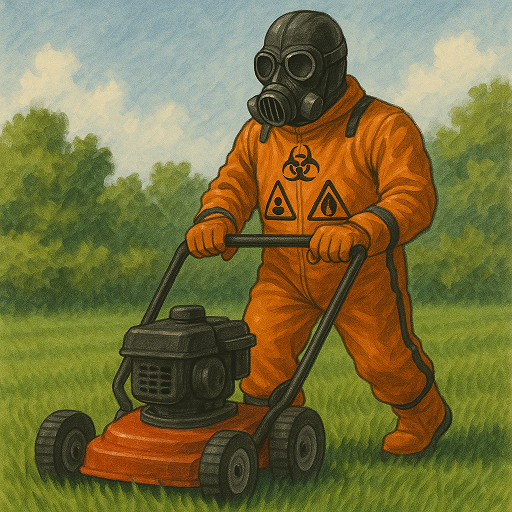
This one deserves an asterisk. If you’re running weekly gas-powered mowing, applying synthetic fertilizers, and spraying biocides like cologne—yes, your lawn is a small pollution hub. But that’s a lifestyle choice, not a turf requirement. Enter robotic mowing, biological fertility, compost-based topdressing, and organic soil amendments. Suddenly, your lawn becomes part of the carbon solution—not the problem.
-
“Lawns Are Useless and Just for Show”
Translation: lawns aren’t performing a function we can monetize or Instagram. This assumes that usefulness is defined by edibility or aesthetics. But lawns offer real services—they cool the air, reduce noise, trap dust, absorb carbon dioxide, and provide a cushion for walking, playing, and living.
A lawn may not feed your family (unless you’re into wheatgrass), but it feeds the water cycle by allowing rain to infiltrate instead of bounce off hardpan surfaces. It cleans the air, it sequesters carbon, and it can drop neighborhood temperatures by several degrees in summer.
The Alternatives: Be Careful What You Wish For
Let’s look at what the lawn haters are offering instead:
Xeriscaping
In theory, xeriscaping is a clever response to dry climates. In practice? It often turns into a high-cost, low-function patch of decorative gravel and dying succulents, still invaded by weeds. Plants that “thrive on neglect” often look exactly like they’ve been neglected. And they don’t handle foot traffic, reflect heat like a skillet, and require herbicides to keep them presentable. That’s a lot of upkeep for something “maintenance free.”
Rockscaping
Here’s a fun experiment: stand barefoot on a bed of river rock in July. That heat island you’re feeling? That’s your yard working against you. Rock landscapes cook the soil, sterilize the biome, and kickstart erosion. And they do nothing for oxygen production, stormwater infiltration, or air purification. If your goal is to recreate Mars, rock is your best bet.
The Garden Alternative
Gardens can be wonderful. They also demand ten times more water, labor, and fertility management than a lawn when done right. And not every homeowner has the time, skill, or interest in running a small farm outside their front door. A vegetable garden can supplement your food, but it’s not a replacement for functional, year-round groundcover.
The Real Issue: It’s Not the Lawn—It’s the System
What most people hate about lawns isn’t the lawn itself. It’s the toxic, synthetic, outdated, and overly engineered version of lawn care that’s been sold to the public for decades.
A biologically balanced lawn flips the script. It:
-
Uses less water thanks to increased organic matter and microbial structure.
-
Requires less mowing, especially when done robotically and naturally.
-
Sequesters carbon, instead of releasing it.
-
Provides cooling, comfort, and cleaner air.
-
Can be maintained without synthetic inputs or harmful runoff.