
Last Updated on August 24, 2025 by Brian Beck
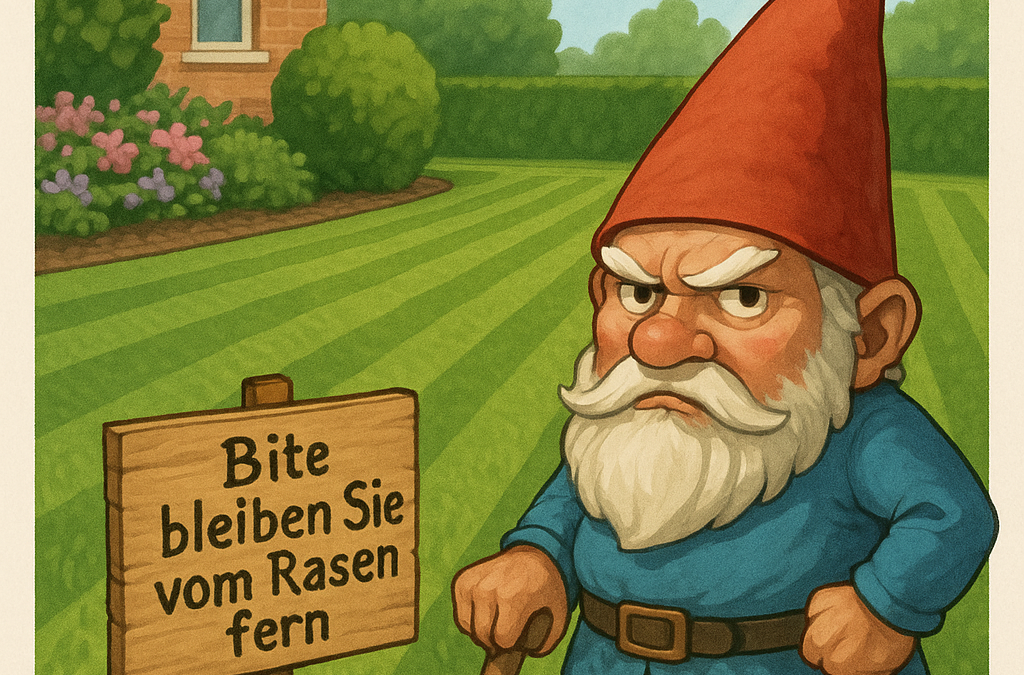
If you’ve ever strolled a neighborhood and spotted a small ceramic sentinel glaring at you from beneath a perfect bluegrass canopy, you may have thought, “Cute.” Incorrect. What you saw was a forward operating base. A clay‐faced commander. A tiny, pointed-cap proclamation that says: this lawn is not just watered—it’s regulated.
And yes, odds are good there’s a German (or someone doing a very committed impression of one) behind that immaculate turf. Let’s unpack this tiny‐statue, laser-leveled phenomenon.
Exhibit A: The Lawn That Salutes Back
You can tell a “Gnome Standard” lawn on approach. The edges look machine-milled, the stripes are straight enough to land a small aircraft, and the grass blades stand at attention like they’ve had a briefing at 0600. Somewhere, a hose reel clicks with military precision. This is not an accident. This is a system.
Gnome translation: “Hallo. We have already aerated twice, calibrated the sprinkler heads, and brewed compost tea with a stopwatch. Please admire from the sidewalk.”
Why Gnomes, Though?
Gnomes are the tiny diplomats of lawn culture: all smiles up front, all business in the back. They’re whimsical enough to pass as decor, but everyone knows what’s really going on: a ceramic de-escalation strategy.
-
The Red Cap: Symbolizes both cheer and a silent siren. Think of it as a traffic light permanently stuck on “Do Not Step Here.”
-
The Fishing Pole: Not a hobby. It’s a perimeter sensor.
-
The Wheelbarrow: Supply chain. Of mulch.
The Gnome–German Lawn Equation
Precision + Patience + Perimeter Security (Gnome) = Terrifyingly Perfect Lawn
Rumor has it the turf is measured in microns, the mower blades are sharpened on a lunar calendar, and the soil pH is corrected with the accuracy of a Bach fugue. If the grass is greener over there, it’s because they graphed the chlorophyll.
Signs You’ve Entered Gnome Airspace
-
Edges so crisp they could slice bread.
-
A quiet, efficient irrigation cycle that whispers, “We finish watering before you finish excuses.”
-
A lineup of gnomes spaced at exactly equal intervals, like airport runway lights for bees.
-
A small wooden sign—hand-lettered in delightful script—reading: Bitte bleiben Sie vom Rasen fern. You don’t need to speak German to understand your ankles have been warned.
Frequently Asked Questions (from Nervous Neighbors)
Q: Are the gnomes armed?
A: Only with disapproval and impeccable standards. That’s enough.
Q: What happens if my dog wanders in?
A: A gnome will pivot 17 degrees and somehow your dog will immediately remember obedience school.
Q: Why is their lawn always the best?
A: The gnomes hold nightly staff meetings. Minutes are kept. The thatch layer signs them.
The Gnome Code of Lawn-duct (posted near the hydrangeas)
-
Thou shalt not step on the turf. The turf steps on you—emotionally.
-
Trim edges on Thursdays. It’s in the treaty.
-
Water before dawn. If the sun sees you, you’re late.
-
Fertilize with intent. And a spreadsheet.
-
Smile at passersby. But in a way that says, “We know what you did last picnic.”
How to Coexist with a Gnome-Guarded Green
-
Compliment the stripes. The gnomes will log it as “civilian goodwill.”
-
Respect the perimeter. Sidewalk selfies only; toe tips off the turf.
-
Offer a peace plant. A potted geranium goes a long way. (They will repot it into better soil. Do not be offended.)
Final Word from the Front
Gnomes aren’t just decorations; they’re the tiny town council of turf excellence. When they assemble, the lawn obeys. The neighborhood benefits. And you—lucky you—get to witness horticultural punctuality in 3D. Just remember: those rosy cheeks and twinkly eyes are adorable, yes, but also a clear, ceramic warning.
Step lightly. Admire freely. And if you must cross… bring pastries. The gnomes respect a proper strudel.