
Last Updated on June 23, 2025 by Brian Beck
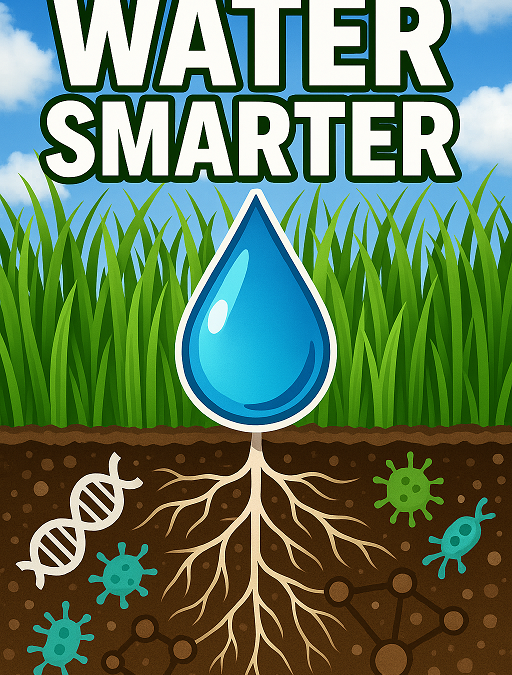
How to Water Smarter: Unlocking Lawn Health Through Deep Watering and Soil Biology
When it comes to lawn care, watering is one of the most misunderstood — and mismanaged — practices. Many homeowners follow a “little and often” strategy, running their sprinklers daily for short bursts. Unfortunately, this creates shallow roots, thirsty grass, and a lawn that’s always on life support.
To grow a healthy, drought-tolerant lawn, you need to understand what water does for plants, why deep, infrequent watering is superior, and how soil biology and organic matter work together to maximize water efficiency.
💧 What Water Actually Does for a Plant
Water is essential for every function a plant performs:
-
Photosynthesis: Water helps create the sugars that fuel growth.
-
Nutrient Transport: Water dissolves minerals in the soil and delivers them through the roots.
-
Turgor Pressure: Water keeps cells full and firm, allowing leaves and stems to stay upright.
-
Cooling Mechanism: Water evaporating from leaves keeps plants from overheating.
Without proper water — and more importantly, proper watering techniques — your lawn is left vulnerable to heat stress, pests, and disease.
🌊 Deep, Infrequent Watering vs. Shallow, Frequent Watering
A deep, infrequent watering schedule encourages grass roots to grow deeper into the soil, where moisture lasts longer and temperatures are cooler. Shallow watering, on the other hand, keeps roots at the surface — where water evaporates quickly, and the soil heats up fast.
Benefits of deep, infrequent watering:
-
Builds root depth and strength
-
Improves drought resistance
-
Reduces disease from constant surface moisture
-
Minimizes runoff and water waste
The goal? Water 1–2 times per week, long enough to saturate the soil 6–8 inches deep. That means about ½ to 1 inch of water per session, depending on your soil type.
🌱 The Power of Soil Biology and Organic Matter
Healthy soil acts like a sponge — but only if it’s alive and well-structured. This is where soil biology and organic matter come in.
Organic material (compost, mulch, humus) improves soil texture, allowing it to:
-
Hold more water per inch of soil
-
Prevent compaction
-
Feed beneficial microbes
Soil microbes play an unsung but vital role:
-
Aerate the soil through their movement and by creating air pockets
-
Break down thatch, preventing it from choking out turf
-
Increase water infiltration, so moisture soaks in rather than runs off
In short: Healthy soil holds more water and makes better use of it — meaning you can water less often and get better results.
💰 Cut Your Water Bill by Watering Smarter, Not More
Here’s the payoff: by improving your watering practices and boosting your soil’s health, you can drastically cut your water budget.
Let’s break it down:
-
Switching from daily watering to twice-weekly can reduce use by 30–50%
-
Increasing organic matter by just 1% can help your soil hold 20,000 more gallons per acre
-
Aerated, biologically active soil absorbs water faster and more evenly, reducing runoff and pooling
That means fewer irrigation cycles, less waste, and lower utility bills — all while your lawn looks greener, denser, and healthier.
✅ The Takeaway
You don’t need more water — you need better soil and smarter watering.
By embracing deep, infrequent watering and investing in your soil’s biology and organic structure, you’ll save money, use less water, and build a lawn that thrives in both wet and dry seasons.
Healthy lawns grow from the ground up. And it all starts with water — used wisely.