
Last Updated on February 24, 2025 by Brian Beck
There you are, it’s mid-June and there are multiple brown spots in several areas of the lawn and the weeds, oh my. You lawn bluntly has gone to Hell and everyone from your spouse, the neighborhood Karen, your brother-in-law, and the HOA are all seemingly lawn experts and your judge simultaneously. What do you do? If you are like most people you will fault the grass and seek a contractor to replace your faulty grass. Before you go down that road, do this.
- Do some reflection and ask yourself when was the last time your lawn looked “normal”. Lawns just don’t give up the ghost overnight, it takes time. You can typically read where a lawn was 9 months ago by how it looks right now. The lawn you have in September will be the best case scenario of what you will have in the spring. Lawns are not lost in the summer, they are lost during winter. When it is dry a lawn with a shallow root structure will be highly susceptible to winterkill.
- How were you watering last year? Was it shallow and frequent? Was there a period where the lawn suffered massive heat and dehydration stress? Was it attended to with therapy or was it left in a weakened state? Did you water over the winter wen it was dry and above 40°? Water is a carrying mechanism and unless the roots are getting adequate hydration, nutrients cannot flow into the tissues of the plant. Whenever you water, water deep, deep enough to get the water to the roots 6-8″ down for 45-60 minutes at night. If that causes runoff you have compaction or clay issues, both a sign of an inorganic soil with low biology.
- Examine your thatch. This is the dead root growth of the lawn, just below the crown of the lawn and right on top of the soil. If it is thicker than your little finger it is too thick. This will impede air, water and nutrients from getting into the soil costing you big time in wasted energy and resources, mainly water.
- It is a safe bet that you are using synthetic fertilizers. If you are be informed that the soil along the front range is marginal and post-development soils are severely deficient in organic matter which enables the soil to hold water. Synthetic fertilizers burn carbon out of the soil and kill off microbial life. This not only makes it bad but worse.
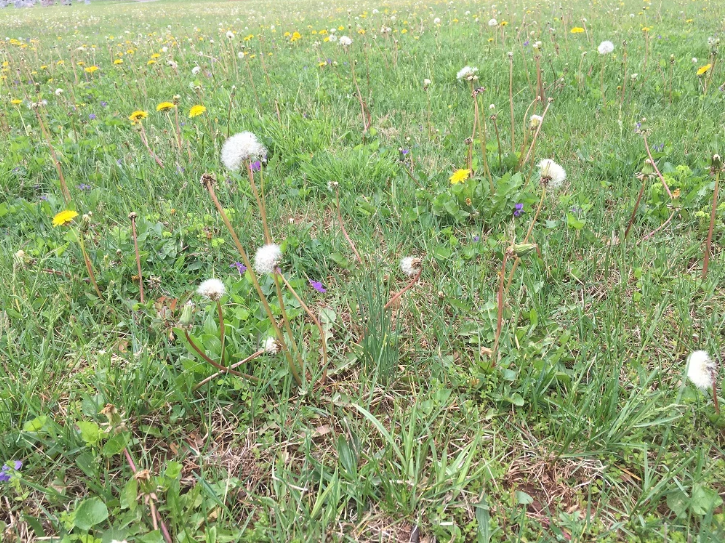
- Weeds are a sign that the soil is nutritionally imbalanced. Weeds are indicators of what is happening in the soil. If you learn what types of weeds you have you can read what is happening in the soil.
- Most lawns are managed in and by complete ignorance of what is happening in the soil. Once you test the soil the problems present themselves and can be addresses specifically, rater than guessing, wasting time and money. All of the problems you are having are microscopic in nature and cannot be seen or identified with the naked eye.
- When you understand the biological system and correct all of the factors that led to the failure you can reverse the damage, heal the soil and you will heal the grass. Plants are only as good as the soil that they are in.