

Quiet Luxury: The Neighborhood Upgrade Nobody Talks About
There’s a kind of “luxury” that doesn’t show up on a credit card statement like a new kitchen or a lifted truck. It shows up on a Saturday morning when your neighbors are getting their eardrums rattled by a string-trimmer symphony… and your yard is just quiet. No...
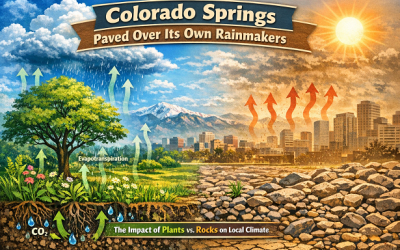
Colorado Springs Paved Over Its Own Rainmakers
How plant life fuels clouds, cools neighborhoods, and why “rock yards” are the opposite of water-wise A lot of longtime Colorado Springs residents remember a certain summer rhythm: warm mornings, clouds building by early afternoon, and then—almost like clockwork—a...

Seven Moves That Pull Your Lawn Out of Dysfunction (and Into Biology)
If you’ve been living in the synthetic system, you already know the deal: quick hits, constant inputs, and a lawn that looks “fine” until it doesn’t. Then you’re chasing problems—dry spots, disease, weeds, compaction, thatch—while paying more every season for less...

I Ran a Few Hundred Reviews Through AI… and It Wasn’t Pretty
The other day I did something I probably shouldn’t do if I want to stay in a good mood: I started reading reviews for a large national lawn care company. You know the type. Big brand. Big trucks. Big promises. Big marketing budget. And after about twenty minutes of...
The Most Frustrating Part of Teaching People the Biological Program
There’s a specific kind of frustration that shows up in my business again and again. It’s not the hard lawns.It’s not the ugly soil reports.It’s not even the customers who’ve been sold the same synthetic routine for 10 years straight. It’s this: People want a...

The Spring Lawn Sprint: Why You Keep “Almost There” (And How to Finally Get There)
Every year it happens. The calendar flips, the holidays clear out, and suddenly otherwise normal adults become lawn sprinters. You know the type—maybe you are the type. The first decent day of the year hits and it’s like a starter pistol goes off: “I need to scalp...
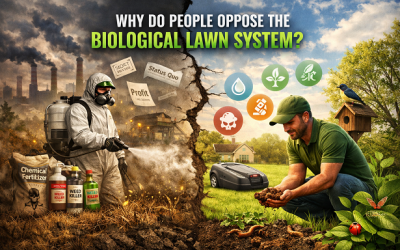
Why Do People Oppose the Biological Lawn System?
If you’re building (or switching to) a biological soil program, you’ll eventually run into a strange phenomenon: Some people don’t just disagree with it… they resent it. Not because it “doesn’t work.” Not because they’ve tested it and found it lacking. But because the...
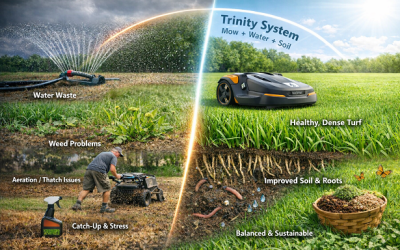
What Trinity Changes
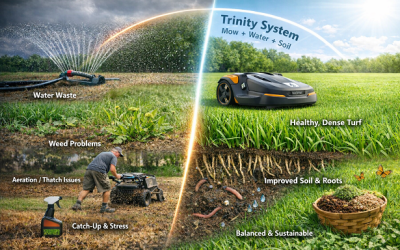
Trinity = Robotic Mowing + Irrigation Optimization + Biological Soil Program Important clarification: The Trinity system does not rely on the claim that mowing becomes “cheaper” because it’s automated.The power of Trinity is that mowing becomes correct and...

Getting Your Lawn Where It Needs to Go (Without Forcing It)
There’s a moment every homeowner hits—usually right after they spend real money and real hope—where they look at their lawn and think: “Okay… why doesn’t it look perfect yet?” I get it. You want results. You deserve results. And yes—biology can move fast. Sometimes...
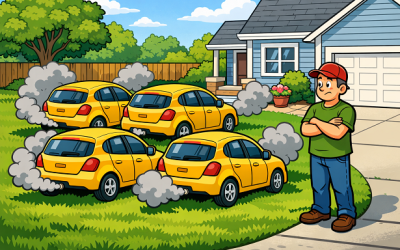
4 Cars Running On The Average Lawn
A chemical lawn program creates “waste” in two layers at once: Upstream waste (what it took to make and deliver the products) Downstream waste (what happens in the soil after you apply them — gases, losses, lockups, runoff) Here’s how that shows up in real life. 1)...

Trinity: The Decade-Long System We’re Finally Putting in the Hands of the Average Person
Most industries don’t actually sell outcomes. They sell mystery. They sell “trust us,” vague promises, and just enough information to keep you dependent. And the lawn world might be one of the worst offenders—because conventional wisdom has been repeated so long that...

Colorado Parks & Rec Departments
To the Parks & Recreation Team, My name is Brian Beck. I run two local businesses focused on the future of turf: modern, automated mowing and a biological soil-health approach that helps grass thrive with fewer inputs. Personal-dna I’m writing because I see Parks...