

The Three Pronged Approach with Biological
The critical difference between the synthetic and the biological approaches are that in the synthetic approach the grass plant is only receives a few of the many elements that it requires all while killing off the soil biology. In the biological method, the soil is...

Avoid lawn dehydration this spring, now you have an option!
This month you have a choice whether or not you want to face a dehydrated soil before the growing season. This causes a lot of problems and is completely avoidable. We have a solution for the dilemma of irrigation automation in early spring without incurring...

2023 and Lawn Automation
2023 will be a remarkable year for lawn automation. The rise of lawn robot automation will fill the need for labor and help keep the price tag of maintaining a lawn lower. The current labor shortage can also be solved by mitigating this problem with automation. The...

The “Formula” of what you are Losing C+W(30%)+A+P=T
I have been doing a lot of research lately that explains and proves the reality of using synthetics and the benefits of using a biological system of fertility. I have created a formula that will help to explain this and quantify what you are spending when you are...
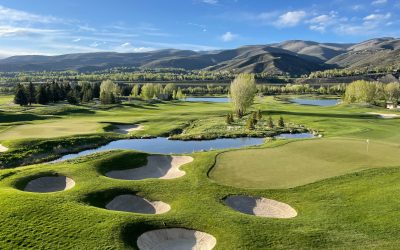
“I don’t want a golf course”
I often hear this response when I start talking about correcting issues in my customers lawns: "I really don't want it to look like a golf course." In people's minds they have built up that a golf course is the epitome of refinement, health and beauty and that it is...

Where do I start?
How does the biological method work? Most people have a Stage I or Stage II Lawn. You want a Stage III or a Stage IV lawn that has improved thatch levels, 6.5 pH, 3% or better organic content, high soil porosity, high water carrying capacity, natural aeration and...

The Case for Automation, Commercial Edition
Change is certainly in the air. Modern technology such as AI & 4G connectivity, coupled with battery capability and older technologies such as GPS and well, uh, mechanical mower has brought us robotic mowing. But why have you never heard of a near 30-year-old...
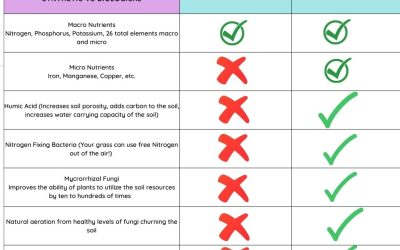
Synthetic Vs Biological
This chart represents the differences between the two methods of fertility. One costs you more in the long run and one saves you money over time. You decide which one is better. Let us show you how to engage and heal your lawn. We are having a lot of success. Will you...
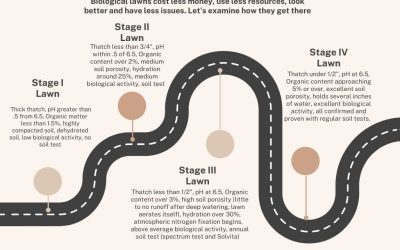
Biology wins, every time!
In the search for better lawns we have been taught to use the one thing that works very well but has a dark side. I am speaking about synthetics. They are just like steroids and methamphetamines. They work really well which is why people tend to use them but they have...

Bridging the Turf Divide: Why Synthetic Lawn Care Isn’t the Enemy — But It Isn’t the Solution Either
In the lawn-care world, there’s a quiet tension that pops up everywhere — at conferences, in online groups, inside municipal maintenance departments, and even between neighbors. It’s the divide between: The Synthetic CrowdandThe Biological Crowd Both groups care...

The Hidden Chemistry of Your Lawn:
🌱 **The Hidden Chemistry of Your Lawn: Why Nutrients Get Stuck, Locked Out, or Work Against Each Other** Most people think lawn care is about “adding fertilizer.”But the real story—the one nobody in the synthetic world ever explains—is that your lawn is fed by a...

Synthetic vs. Biological Lawns: Two Worlds, Two Outcomes
Most people don’t realize this, but there are really two lawn-care universes operating in America today. One is the traditional, synthetic-heavy universe — the world of quick fixes, chemical crutches, and a lawn that always “needs something” to look decent.The other...