

Lawn Chemicals Hurt Our Planet
Lawn chemicals, like weed killers, can harm the environment. They make grass look nice by killing weeds, but they cause problems. These chemicals can wash into rivers and lakes when it rains, hurting fish and plants. They can also make the soil unhealthy, so worms and...
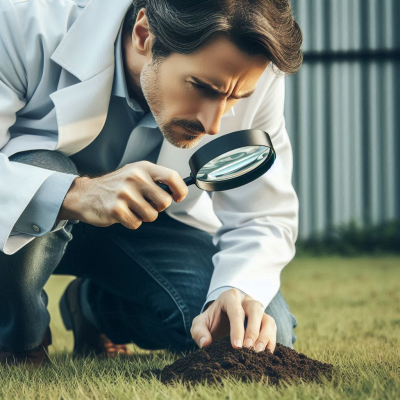
Why you need a soil expert
Why a Biological Fertility Method is Better for Your Lawn Taking care of a lawn can be tricky! Many people use synthetic fertilizers, which are like chemical foods for grass. But these can cause problems. A better way is the biological fertility method. It’s natural,...
A Simple Guide to Healthy Soil for Your Lawn
Chapter 1: The Trouble with Synthetic Fertilizers and Chemicals A Brief History of Synthetics A long time ago, people grew plants using natural methods, like compost and manure. But around the early 1900s, scientists in Germany, like Fritz Haber and Carl Bosch,...

“My Lawn is Doing Just Fine, It Looks Good”
I was out giving estimates the other day, and I was on someone's lawn walking it with them to give them a quote on a special service. While we were walking on the lawn, I could feel how spongy the surface was and looked down to see my feet sinking into the turf as I...

What Defines a Healthy Lawn?
What is the goal for your lawn, to look good? Does a good looking lawn define health? Is it possible to have a lawn that looks good that is unhealthy on a cellular level? Should a lawn that is healthy use resources in an efficient manner? Is it possible to have a lawn...

The Difference Between a “Good” Looking Lawn and an Efficient Lawn
It is really easy to drive down your street and see a crappy lawn. They are obvious and stick out like a sore thumb. It is also easy to spot a great looking lawn, but there is an element there that cannot be seen by the naked eye that is affecting these lawns in a...

How to Avoid Lawn Problems
I once read a quote that read, "Observe the masses and do the opposite". I have adopted this philosophy as the traditional method of maintaining a lawn left me yearning for more as there was little satisfaction in the process. I'm going to enumerate these 10 ideas and...

What YOU Need to Know About Our Biological Program
I have always noticed that when someone understands something they can simplify it for others. I have spent a lot of time researching how to make lawns better. What I have discovered is that almost everything we have been taught is either flawed or is an outright...

Ticking time bomb
Most people are two dry winters away from total lawn loss and they don't even realize it. They often skirt this disaster by the skin of their teeth. The sad thing is that they often get robbed by of of the multitude of soil failures that are going on. They are not so...
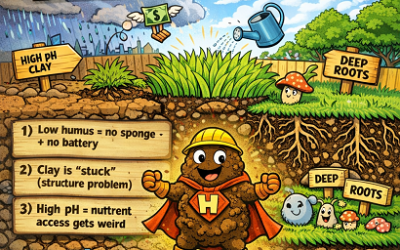
Understanding Humus
When plants and roots die (or drop leaves), tiny soil workers (microbes) eat that stuff. After lots of eating and re-eating, what’s left becomes a dark material called humus. Humus is the part that doesn’t rot fast anymore. It sticks around a long time, helping soil...
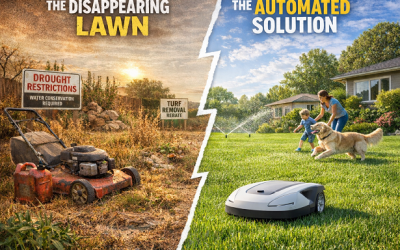
THE LAWN YOU ACTUALLY WANTED (WITHOUT THE WEEKLY MOWING CIRCUS)
Gas mowing is dying. Not because it can’t cut grass… but because it’s an expensive, loud, inefficient relic that keeps getting more costly to operate. Robotic mowing is the opposite: quiet, consistent, ultra-efficient—and it finally fixes the biggest flaw in modern...

The Soil Workforce: Meet the Microbes (and Their Job Titles)
The Soil Workforce: Meet the Microbes (and Their Job Titles) If you’ve ever looked at a lawn and thought, “Why is this one thriving while mine is living on the edge of a nervous breakdown?”—it’s usually not the grass. It’s the staff. Under your feet is an entire...