Last Updated on August 3, 2025 by Brian Beck
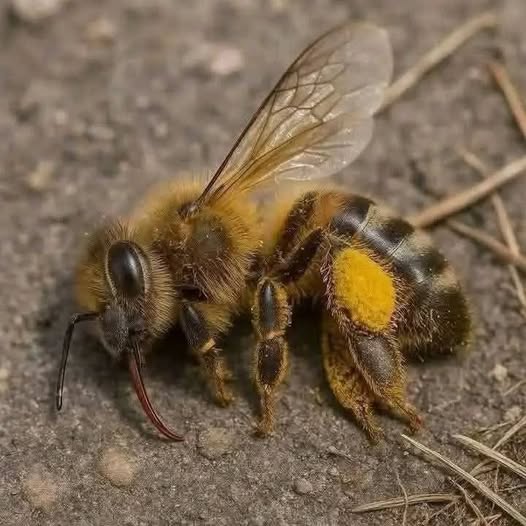
There was a time in my life when I kept bees. Anyone who has ever tended a hive knows the kind of quiet joy it brings. The hum of life, the rhythm of nature, the sweet reward of honey — it was a connection to something pure and profoundly alive. But that joy was dimmed every time I saw a neighbor’s lawn being sprayed, every time I read the label on a jug of weed killer, and every time I walked out to my hives to find the buzzing a little quieter than the day before.
Spraying pesticides never sat right with me, even before I fully understood the consequences. I used to believe the labels — “safe when used as directed,” “only targets pests.” But nature doesn’t work that way. A chemical designed to kill doesn’t always ask for permission. It doesn’t stop at the weed or the bug. It lingers. It spreads. And too often, it hurts the very life we want to protect — pollinators, birds, frogs, pets… even people.
That disconnect — between wanting a beautiful lawn and doing harm in the process — is what pushed me toward the biological method. Because here’s the truth: most weeds are not the enemy. They are messengers. They show up when the soil is out of balance, when it’s compacted, depleted, or overly disturbed. Spraying them may get rid of the symptom, but it does nothing to fix the cause. In fact, it often makes it worse.
When I started to understand that, everything changed.
Biological lawn care isn’t just a “green” alternative. It’s a return to sanity. It’s a method that respects the complexity of life in the soil — microbes, fungi, insects, all working in harmony. Instead of declaring war on the land with every spray bottle and broadcast spreader, we begin a conversation. What does the soil need? Why are these weeds here? What can we do to restore balance, rather than force control?
And here’s the beautiful part: when you work with nature instead of against it, the need for toxic chemicals drops — and in many cases, disappears entirely. We reduce harm to wildlife. We protect the health of children and pets who roll around in the grass. We stop sending poisons into our waterways. And we create something far more resilient than a chemically dependent lawn: we build a living system.
So yes, I used to keep bees. And I still think about them — not just as pollinators, but as reminders. Life is fragile. Life is precious. And every decision we make — on our lawns, in our gardens, in our communities — sends ripples outward.
Let those ripples be ones of health, not harm.
Let’s grow better. Let’s grow biologically.