
Last Updated on July 16, 2025 by Brian Beck
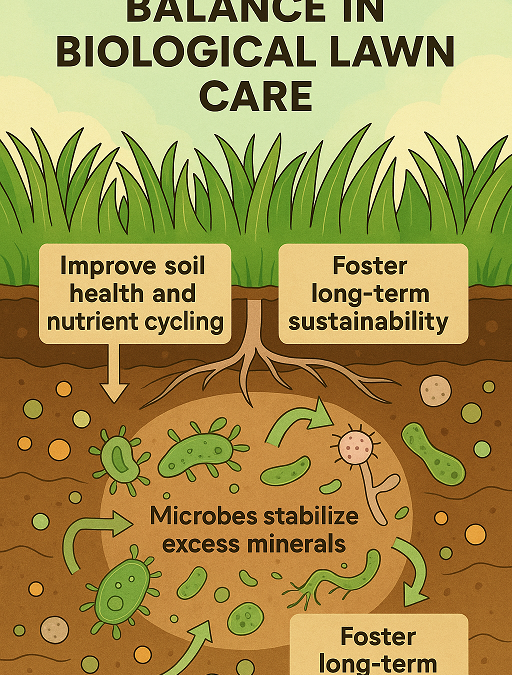
When we say microbes “buffer” excess elements in the soil, we mean that microbes help regulate, neutralize, or mitigate the negative effects of nutrients or minerals that are present in excessive or imbalanced amounts—so they don’t harm the plant or throw off the soil chemistry.
Here’s how that works:
🔬 What “Buffering” Means in Soil Biology
-
Immobilization of Excess Nutrients:
-
Microbes can absorb and hold onto nutrients (like phosphorus or nitrogen) in their own cells or in biofilms. This prevents those nutrients from overwhelming the plant or leaching into groundwater.
-
This temporary “lock-up” gives the plant a chance to take in nutrients at a steady, healthy pace.
-
-
Chemical Transformation:
-
Microbes can convert excessive nutrients into different forms that are either:
-
Less harmful to plants
-
Temporarily unavailable until needed
-
-
For example, bacteria can convert ammonium (which can be toxic in excess) into nitrate through nitrification.
-
-
Balancing Antagonistic Relationships:
-
Some nutrients fight each other chemically (e.g., too much potassium can block magnesium uptake). Microbial activity can moderate these imbalances by regulating nutrient availability through enzyme release and pH stabilization.
-
-
pH Buffering:
-
Certain microbes release substances (like organic acids) that help neutralize overly alkaline or acidic conditions, indirectly helping mitigate nutrient toxicity or deficiency due to extreme pH.
-
🧠 Think of Microbes as Soil Traffic Cops
If too many nutrients flood the soil, plants can suffer—just like a highway jammed with cars. Microbes step in like traffic cops:
-
They slow down the flow,
-
Redirect traffic when needed,
-
And make sure things move in an orderly, manageable way for the plants.
🚨 Without Microbes?
When there’s little or no microbial life:
-
Nutrients in excess can cause toxicity or imbalance.
-
Nutrients may leach away or burn the plant.
-
The soil loses its biological buffering capacity, and everything becomes either guesswork or expensive to control synthetically.