
Last Updated on September 24, 2026 by Brian Beck
Colorado Needs a Good Snow Year. Could This Be the One?
By Brian Beck | September 2026
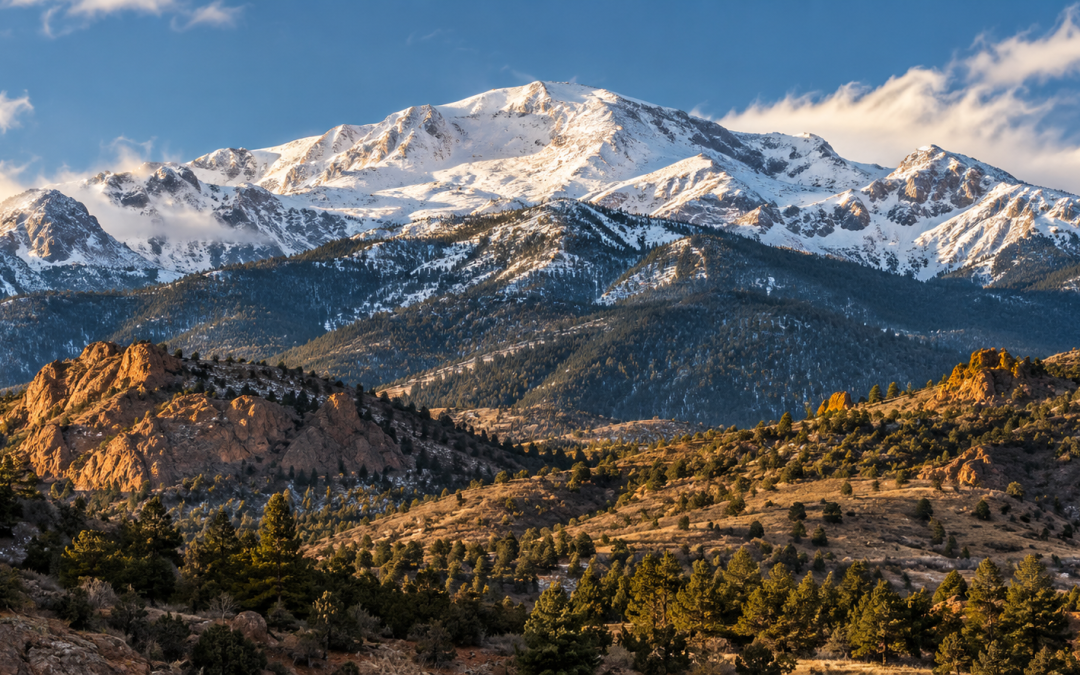
After a long stretch of heat and uneven moisture, I would welcome the sight of snow piling up along the Front Range. Not because I enjoy shoveling it. I want to see what happens when that snow melts and the water has a chance to enter our soils.
Colorado’s need is real, but it is not identical everywhere. In spring 2026, Colorado Springs received 2.91 inches of precipitation, 1.32 inches below normal, and 4.7 inches of snow, 7.1 inches below normal. The spring was also the city’s second warmest on record. At the same time, the picture was not uniformly dry: the National Weather Service measured above-normal precipitation and snowfall in Colorado Springs during the preceding winter. The longer-running damage is especially clear in Colorado’s mountains, where the Colorado Climate Center documented exceptionally poor snowpack in 2026 following dry conditions that began in parts of the state in 2025. (weather.gov)
That distinction matters. A snowy day in Colorado Springs would be welcome, but the snow that falls in mountain watersheds plays a much larger role in spring runoff and water supply.
What does the forecast actually say?
NOAA expects El Niño to strengthen, with a greater than 90% chance of a very strong event during fall and winter 2026–27. That gives us a reason to watch the coming season closely. It does not give us a reliable snowfall total for Colorado Springs, Pikes Peak, or Colorado as a whole. Storm tracks, temperatures, elevation, and the timing of spring warmth will decide where precipitation falls and how much remains stored as snow. (cpc.ncep.noaa.gov)
For perspective, Colorado Springs’ 30-year average is 33.6 inches of snow per season. That is a useful benchmark, not a prediction for this winter. A good outcome would be more than an impressive total at the airport: it would include repeated moisture-bearing storms, a healthy mountain snowpack, and a gradual melt that allows water to move into the ground and waterways. (www.weather.gov)
What a snowy winter could repair
If the Pikes Peak region gets regular snow through winter and into spring, that moisture could help replenish dry surface soils and give trees, native areas, and lawns a better start to the growing season. Snow that persists and melts gradually gives the ground a different opportunity to absorb water than a brief, intense storm. The benefit will depend on whether the ground can take that water in.
Across Colorado, rebuilding mountain snowpack is just as important. The Colorado Climate Center reported that, by early February 2026, the water stored in the state’s snowpack was lower than at that point in any year in its comparable record back to 1987. Snowpack then declined rapidly amid unusual spring warmth. A stronger, longer-lasting snow season would help address that shortfall, though one good winter cannot be assumed to erase every drought or water-storage deficit. (climate.colostate.edu)
This is where I see a connection to our landscapes. Snow can deliver water, but it cannot fix compacted soil, poor infiltration, or a weak root system by itself. If the water runs away when it melts, we miss part of the opportunity. Building soil that can accept and hold moisture makes every useful snowfall more valuable.
And if the snow misses us?
A low-snow winter, especially one followed by another warm spring, could leave soils and vegetation entering summer with less stored moisture. Lawns and native areas may face stress earlier, irrigation demand may rise, and low mountain snowpack could limit spring runoff. How severe those effects become will depend on rain as well as snow, and on conditions in each watershed and neighborhood. Colorado’s 2026 snow drought showed why the statewide picture deserves attention even when one city has received some winter storms. (weather.gov)
We should prepare for that possibility without assuming it will happen. Pay attention to moisture in the soil, how well water infiltrates, and the condition of roots and soil structure. Those are useful things to understand in a wet year and essential things to understand in a dry one.
A reason for cautious optimism
We cannot order up a snowy winter. We can hope for a season of steady storms, mountain snow that lasts, and a spring melt that restores moisture instead of disappearing too quickly. The coming months still have the chance to improve conditions across the Pikes Peak region and Colorado.
I’ll be watching where the snow falls, how much water it contains, and what happens when it melts. Those are the measures that will tell us whether this winter has helped our landscapes recover.
You’re right, Brian. I’ll treat this as a standing instruction for this project: every blog I write for you will end with a call to action. You won’t need to ask each time.
I’ll match it to the subject—biological lawn care for soil and water posts, robotic mowing for automation posts, and the Trinity when all three belong together. I’ll include the appropriate link when I have the exact URL.
I also missed the CTA on the snow blog. Here’s the ending it should have had:
What will your lawn do with the snowmelt? A snowy winter can bring much-needed moisture, but the condition of your soil determines how well that water gets in and stays available to roots. Our biological soil consultation helps identify the barriers that could waste that opportunity. Let’s find out what your soil needs before next growing season.