

Natural Soil Aeration with Microbes: How It Really Works
When most people think of aeration, they picture a machine punching holes into the ground. While that approach can have short-term benefits, it’s actually a mechanical band-aid for a much deeper issue. True and lasting aeration happens naturally—through the work of...
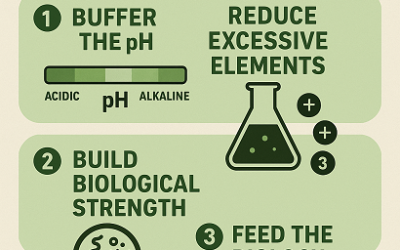
What It Takes for a Lawn to Become Balanced
Most people assume that achieving a healthy lawn is as simple as throwing down some fertilizer or watering more often. In reality, a truly balanced lawn is not the result of a quick chemical reaction but a process—a careful sequence of soil correction, buffering, and...
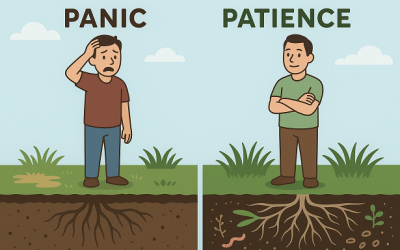
Calming Lawn Anxiety: Why It’s Not as Bad as It Looks
If you’ve ever walked out into your yard, noticed a patch of brown, thinning grass, or even a whole section that seems “off,” you’re not alone. Many homeowners feel a wave of anxiety when they see their lawn struggling. The good news? Almost every lawn problem is...

Nutrient Flow Efficiency: The Future of Lawn Care
Most people think about lawn care in terms of fertilizer. Spread a bag of product, water it in, and hope the grass greens up. For decades, that’s been the standard approach. But in reality, fertilization as we know it often misses the bigger picture. That’s why we’re...

Mediocre Lawns Are Expensive
The Hidden Cost of Ownership: Why Your “Average” Lawn May Be the Most Expensive One on the Block When most homeowners think about lawn care, they picture two extremes: the perfectly manicured golf course fairway and the average-looking, “good enough” lawn they already...

When Topdressing Your Lawn Backfires
Topdressing a lawn with compost sounds like a natural, beneficial practice. The idea is simple: spread organic matter across the lawn to improve soil structure, feed microbes, and boost fertility. But here’s the catch—if your compost isn’t fully digested and...
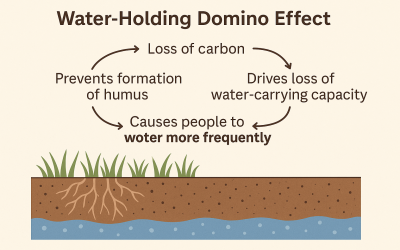
Why We Waste Water – And How Soil Carbon Holds the Answer
When most people think about water waste in lawns, their minds jump straight to sprinklers running at the wrong time of day, broken irrigation heads, or neighbors who water sidewalks instead of grass. While those things are certainly part of the problem, the real...

The Day I Met the Bureaucratic Wall of Mediocrity
A few years ago, I walked into City Hall with something simple and useful: an idea to save water without scapegoating lawns. Not a sales pitch. Not a rant. A plan. Teach residents how soil actually works—how carbon in soil increases water carrying capacity, how...
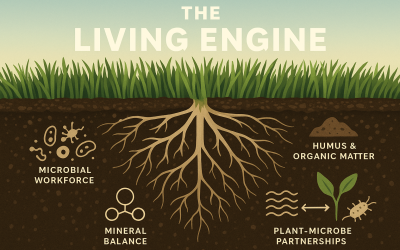
The Living Engine: How Our Biological Program Really Works
Most lawn programs treat your turf like a machine with broken parts: pour in more fuel (N-P-K), swap a plug (pre-emergent), and hope the noise stops. Our approach is different. We build a living engine in your soil—an ecosystem that makes and moves nutrients, stores...

Colorado Parks & Rec Departments
To the Parks & Recreation Team, My name is Brian Beck. I run two local businesses focused on the future of turf: modern, automated mowing and a biological soil-health approach that helps grass thrive with fewer inputs. Personal-dna I’m writing because I see Parks...

If you’ve been burned by lawn crews… you’re not crazy.
Most mowing complaints aren’t about grass. They’re about reliability, communication, and preventable human error. A better company doesn’t “try harder.”A better company builds systems so problems don’t happen in the first place—then uses automation to keep everyone...

When Soil Goes Anaerobic: The Invisible Gas Problem That Wrecks Lawns (and Compost)
Most people can rattle off the “big three” nutrients—Nitrogen, Phosphorus, Potassium—like they’re the holy trinity of plant health. But the truth is: your lawn doesn’t fail because it’s missing one more bag of something. It fails because the soil environment fails....