
Last Updated on December 1, 2025 by Brian Beck
Most people look at a soil test and see numbers, ratios, jargon, and a whole lot of “nope.” That’s normal. Soil chemistry is complicated — until you explain it with something everyone understands: A supermarket.
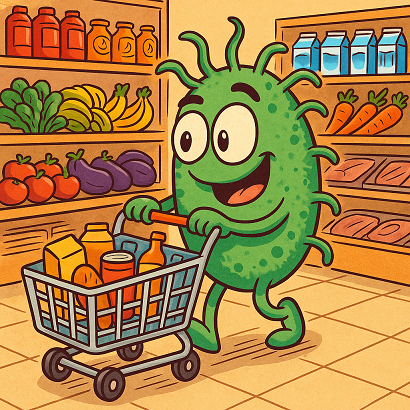
Yes, your lawn is basically a giant grocery store filled with customers, shelves, aisles, and a whole economy running behind the scenes. And your soil test? It’s the store report that tells you what’s stocked, what’s missing, and how well everything is moving.
-
Base Saturation = The Food on the Shelves
Base Saturation tells you how much of each major nutrient the soil is holding: calcium, magnesium, potassium, sodium, and hydrogen. Think of it as the amount of food on the shelves. A soil with the right balance is like a grocery store where every shelf is filled just enough — not bare, not overflowing.
-
pH = The Number of Aisles You’re Allowed to Walk Down
pH controls access. pH is the number of aisles your shoppers (microbes and roots) can walk down. If your pH is too low or too high, entire aisles become off limits. The right pH opens all the aisles.
-
Formazan (Microbes) = The Shoppers in the Store
The Formazan test measures microbial activity. These microbes are the shoppers. They move nutrients, digest them, and deliver them to the plant. High biology is a supermarket buzzing with busy shoppers; low biology is a dead store.
-
Humus = The Currency in the Store
Humus is the currency the shoppers use. It stores nutrients, buffers pH, feeds microbes, and holds water. High humus soils are wealthy; low humus soils are bankrupt.
A Healthy Soil = A Thriving Marketplace
When Base Saturation (shelves), pH (aisles), microbes (shoppers), and humus (currency) are in harmony, your lawn becomes healthier, more drought-resistant, and cheaper to maintain.
Read more here: