Last Updated on October 19, 2025 by Brian Beck
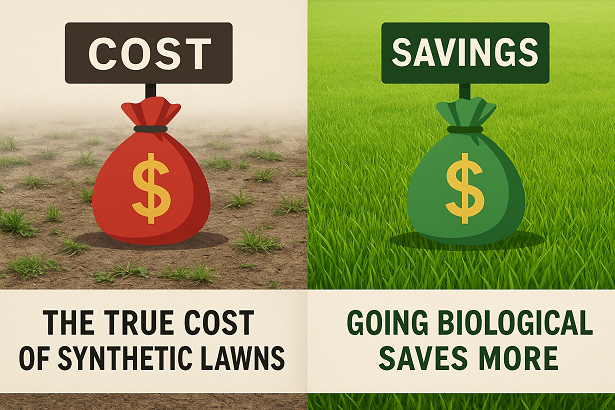
When it comes to lawn care, a lot of folks have been led to believe that the traditional synthetic route is the simplest and most cost-effective. After all, it’s what’s been done for decades. But let’s get real: those quick fixes and synthetic inputs come at a hidden cost. And that cost isn’t just in dollars—it’s in the health of your soil and the long-term efficiency of your lawn.
Breaking the Myth: Why Biological Isn’t More Expensive in the Long Run
At first glance, switching to a biological system might seem like a bigger investment. You might need to test your soil, understand its deficiencies, and invest in repairing years of damage that synthetic products have left behind. But here’s the kicker: once you correct the soil and let biology do its work, your lawn actually becomes far more efficient and self-sustaining. The costs you put in at the start are overshadowed by the long-term savings.
Understanding the Hidden Costs of Synthetic Systems
People often don’t realize that they’re already paying for the side effects of a synthetic system. Poor soil health, increased water usage, and the ongoing need to treat symptoms rather than the root cause all add up. It’s like trying to fix a sinking boat by just bailing water out rather than patching the hole. The biological method, on the other hand, patches that hole and restores balance.
Embracing a New Mindset: The Lawn as a Living System
Think of going biological not as a one-time fix but as a lifestyle change for your lawn. It’s about investing in soil health so that your lawn can sustain itself with fewer inputs over time. Once the soil is balanced, the lawn becomes more resilient, needs less water, and requires fewer costly treatments. In other words, it pays for itself in savings and sustainability.
Conclusion: The Path Forward
In short, the synthetic system might look cheaper on the surface, but it’s a bit of an illusion. By embracing the biological approach, you’re not only saving money in the long run, but you’re also creating a healthier, more resilient lawn that’s better for the environment and easier to maintain. And that’s a change worth making.