
Last Updated on July 15, 2025 by Brian Beck
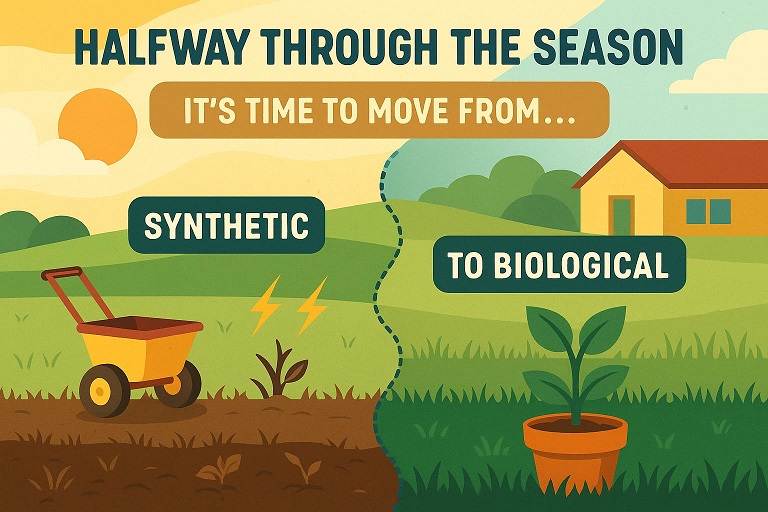
We’ve hit the midpoint of the lawn care season. The summer heat is pounding, water bills are climbing, and stress is starting to show on lawns everywhere. If you’ve been relying on synthetic fertilizers and quick-fix treatments, chances are you’re seeing the limitations of that approach.
But here’s the good news: now is the perfect time to start building the foundation for a healthier, more resilient lawn—one that doesn’t depend on synthetic chemicals. You’re not too late. In fact, you’re right on time.
The Synthetic Trap: What You’re Really Signing Up For
Synthetic fertilizers and treatments might deliver quick results, but they come with a hidden cost. Over time, they:
-
Kill off beneficial soil microbes
-
Cause soil compaction and poor water infiltration
-
Create dependency on constant inputs
-
Lead to thatch buildup and shallow root systems
-
Drain your wallet with high water bills and ongoing chemical applications
It’s like a treadmill you can’t get off of. You’re constantly running, but never really getting anywhere. If you’re tired of throwing money at the same problems every season, you’re not alone—and you’re not stuck.
Mid-Season: The Best Time to Start Your Lawn’s Recovery
Mid-season is ideal for transition. The soil is warm, microbial life can ramp up quickly, and there’s still time to make meaningful progress before fall.
Starting now means:
-
You can improve soil health during active growth
-
You set the stage for a stronger lawn going into winter
-
You reduce your water use during the hottest months
-
You eliminate the need for band-aid treatments when fall problems hit
A biological fertility system builds your lawn from the soil up. By reintroducing microbial life, correcting mineral imbalances, and feeding the biology that powers plant health, you create a lawn that thrives naturally—without the chemical crutches.
What to Expect
When you transition to biological care, you won’t just get a green lawn. You’ll get:
-
Fewer weeds (because your soil isn’t inviting them anymore)
-
Better drought tolerance
-
Lower water bills
-
Soil that’s alive, balanced, and working with you
-
A lawn that greens up earlier in spring and stays strong into fall
The Bottom Line
If your lawn is struggling under the weight of synthetic inputs—or if you just know there has to be a better way—this is your chance to start something new. We’re halfway through the season, and that means you’ve got just enough time to turn the ship around and finish strong.
Let’s leave the synthetic trap behind. Let’s build something that lasts.
Let’s go biological.