
Last Updated on July 29, 2025 by Brian Beck
Watering your lawn shouldn’t feel like dumping money down the drain. Yet, many homeowners are doing just that—overwatering, watering at the wrong times, or using systems that treat every square foot the same, regardless of need. With smarter strategies and a few biological principles, you can stretch every drop of water, improve your lawn’s health, and trim your utility bill.
Here’s how to get the most out of your lawn water, cut waste, and save money:
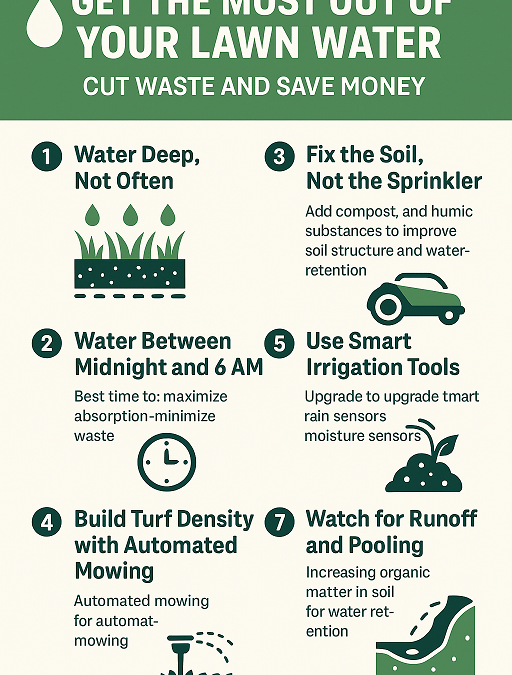
1. Water Deep, Not Often
Most people water too frequently and too shallowly. This encourages shallow roots, making your lawn more vulnerable to heat, drought, and disease. Instead, aim to water deeply and infrequently.
Why it works: Deep watering trains grass roots to grow down into the soil, where the moisture lasts longer. This builds drought tolerance and reduces the need for constant irrigation.
Pro Tip: Apply about ½ to 1 inch of water per session, and wait several days between waterings depending on weather and soil type.
2. Water Between Midnight and 6 AM
If you’re watering during the heat of the day, you’re losing water to evaporation before it even reaches the roots. And watering at night? That creates a damp lawn ripe for fungal disease.
Best time to water: Between 12 AM and 6 AM. You’ll get maximum absorption with minimal waste and avoid evaporation loss or disease risk.
3. Fix the Soil, Not the Sprinkler
You can have the best irrigation system in the world, but if your soil is dead, compacted, or low in organic matter, it won’t absorb water efficiently.
Biological fix: Healthy soil acts like a sponge. Adding compost, humic substances, and nurturing microbial life improves the soil’s structure and water-holding capacity. A biologically active soil reduces runoff, improves infiltration, and keeps your lawn hydrated longer between waterings.
Microbial bonus: Soil microbes also help aerate the ground, break down thatch, and unlock nutrients—meaning less water, less fertilizer, and fewer issues.
4. Build Turf Density with Automated Mowing
Longer grass blades help, but the real key is turf density. Thick, upright turf shades the soil, reduces evaporation, and protects microbial life.
Mow tip: Use an automated mowing system to cut more frequently and maintain consistent turf height. Robotic mowing builds density by trimming lightly and often—far more effectively than infrequent, heavy mowing. Dense turf cools the ground, reduces watering needs, and creates a self-shading canopy for better water retention.
5. Use Smart Irrigation Tools
Don’t “set it and forget it.” Upgrade to:
-
Smart timers that adjust to weather forecasts
-
Rain sensors that skip watering after rainfall
-
Moisture sensors that water only when needed
-
Drip or sub-surface systems in problem areas or tight beds