
Last Updated on December 13, 2024 by Brian Beck
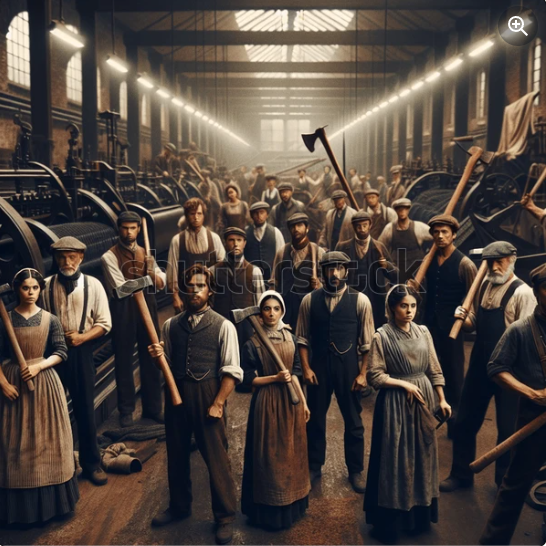
Human beings are resistant to change –period. We don’t like it when our favorite sitcom gets canceled, we hate when our computer software has an update, we get upset when our favorite restaurant closes after 50 years, it is unsettling when we see people grow up, move away and eventually die. Life is constantly moving, and change is inevitable. This often brings with it uncertainty but also brings opportunity. I don’t think people are afraid of automation, I think they are afraid of change. You’re right in your assertion that it is not ignorance, but the initial reaction is not quite wisdom either but rather an instinctual response to the uncertainty which gives rise to anxiety. It is at this point whether people choose to fight or flight that will determine whether or not they tap into wisdom or succumb to fear. I can assure you the textile workers banging on mechanical looms in Lancashire in 1812 were not acting out of wisdom for their future but rather uncertainty or fear. While what they observed was a shock to the system they did not have as much hindsight as we have now. Those workers who were displaced simply went on to other career fields or became the first generation of technicians rather than craftsmen. We have the knowledge and experience to avoid such tragedies.
Resistance driven by fear can quickly be overcome by knowledge or education. While impulse adoption of a fad spell disaster as it is foolish, the failure to implement sound industry changing tools and machines becomes a disservice to those who came before us and a punishment to those who come after us. I believe that it is a shortsighted misconception that the robotic mowing industry is a new one as it has been around for 30 years and that it will take away jobs. How many jobs did the horse and buggy provide? Ranging from the horse breeder, the farrier, the buggy manufacturer, the bridle maker, the street sweeper and the farmer that grew hay and maybe another 20 or 30 career fields. How many jobs are created by modern automobile manufacturing? Hundreds. From the minors that source the materials, to the factory labor, the engine mechanic, the insurance salesman, the aftermarket stereo salesman, etc. thanks to men such as Benz, Daimler, Duryea and Ford we have retired countless animals, expanded cropland for human consumption, improved sanitation, leveraged time and increased our capability of moving material from point A to point B. This all of course comes with a cost as I’m sure there were hundreds of people that were thrown into a ditch before the advent of the electric starter and there are tens of thousands of people that are killed on the roadways every year but the collective benefit to society outweighs the limiting factor of a horse-drawn cart and the injuries and death that are associated with operating a vehicle. One of the most dangerous phrases in the English language is “Why fix it, we have always done it this way?”
Automation isn’t going to replace human beings any more than the advent of the lightbulb, printing press, telephone, computer or the Internet. Tools gave way to machines which gave way to automation which will give way to AI, which are all essentially manifestations and evolutions of the tool. How we decide to react to and utilize these advancements will determine whether we thrive or fail. I am far more concerned with interpersonal relationships and how leaders treat their subordinates than I am their displacement by advancement. There is a severe lack of trust in our business climate that was born out of the Welch mentality of putting employees second. I believe in excellence but not at the cost of the human being. To regain this trust, we are going to need more men like Lombardi that invest in people rather than simply see them as a means to an end. We can reserve that sentiment for the machines. If we are genuinely interested in the welfare of the people that keep the wheels spinning, I feel that it would be in their best interest to better their future by reducing monotonous tasks and improving the potential of their lifestyle by giving them an option to engage in something that is more intelligent and more sophisticated. Let’s give the low value work to the machines and invest in our people to better the equation for getting more work done. My employees do not fear automation as they know it will make their life easier and more creative and dynamic. It will reduce the wasted human and mechanical energy that is expended on conventional systems and methods of achieving work that could increase their potential for compensation. Just as the horse and cart limit the potential of performed work today’s semi tractor-trailer can move 50 times more weight significantly faster and more efficiently. Milton Friedman visited China back in the 60s and observed a public works project. The Chinese workers were building a canal using shovels. Friedman asked the official, “why no digging the canal with earthmoving equipment?” The official said, “oh, this is a jobs program.” Friedman responded to the official, “then why don’t you just give them spoons instead of shovels to create even more jobs?” If we are truly concerned about reducing turnover and creating a professional atmosphere for our employees, we should elevate the professional nature of the job. Are we performing work just for the sake of performing work or are we getting things done in the most efficient manner?