

Your Lawn Might Be Green… But Still Bleeding Money (The Invisible Headwind)
Today I sent a customer an estimate for a Supercharge—and I’ll be honest, his soil report stopped me in my tracks. I’ve seen a lot of dysfunctional soils. I’ve tested hundreds. I’ve seen “bad” in every flavor. But this one was different. It had a negative grading...

Change Feels Like Chaos… Until It Becomes Leverage
AI, Apprehension, and the Pattern We Keep Repeating There’s a lot of apprehension surrounding AI right now, and I understand why. People hear “AI” and instantly think: jobs disappear, livelihoods collapse, chaos follows. But we need to evaluate this without throwing...
The Day I Quit Feeding the Hamster Wheel
There’s a moment every lawn owner hits—when you realize you’re not maintaining a lawn anymore… you’re maintaining a dependency. You’re buying “fixes.” Quick greens. Quick knockdowns. Quick recoveries. And every season it takes a little more to get the same result....
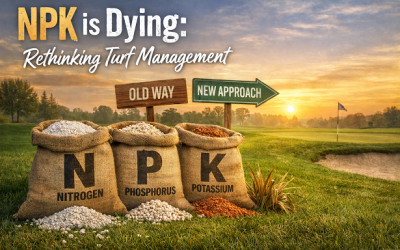
Why NPK Is Dying (and What That Means for Turf)
I just listened to a podcast titled “Why NPK Is Dying” and it confirmed something I’ve been watching unfold in real time: The NPK mindset isn’t failing because nitrogen, phosphorus, and potassium don’t matter.It’s failing because we turned soil into a sterile...

The Perpetual Skeptic: A Recurring Theme (and Why I Get It)
If you’ve been around our program for any amount of time, you’ve probably noticed a pattern. Some people lean in with curiosity.Some people lean in with hope.And some people… lean back with skepticism—arms crossed, waiting for the catch. That skepticism is not rare....

The First Green: When Your Lawn Wakes Up Before Everyone Else
Every year, right about the time most lawns are still wearing that dull winter face, mine starts changing. Not a little. Not “maybe it’s kind of waking up.” I’m talking noticeably green—often a full month before the neighborhood catches up, and sometimes the gap is...

Relief Is a Strategy, Not a Feeling
We’re living in a season where everything feels loud. Prices move. Weather swings. Water gets restricted. Time disappears. And somehow… the lawn is still out there demanding attention like it didn’t get the memo that the world is in chaos. Most people aren’t failing...

Stop Selling Hope. Start Selling Efficiency.
A challenge to DIY lawn owners — and the pros who serve themBrian Beck Let me challenge you right out of the gate: If your “lawn care program” only works when the lawn keeps breaking… that’s not a program.That’s a treadmill. And treadmills are good for one thing:...
Humus and the Balance Horizon Pathway
Why it’s rare. Why it’s expensive. Why it’s the key to turning on the biological engine in your soil—and how to make it for free. If your lawn feels like a needy pet that constantly wants more water, more fertilizer, more fixes, and more attention… it’s not your lawn....

Stop Maintaining the Problem. Start Choosing Efficiency.
By Brian Beck | Blade to Blade Lawn & Landscaping Every January, people make decisions. Not resolutions — decisions. There's a difference. A resolution is a wish dressed up in willpower. A decision is a line in the sand. One says "I'd like to." The other says...

Are You Hiring the Right Company?
Most people think they are hiring a lawn company. What they are often really hiring is a cycle. A cycle of applications, guesses, temporary color, recurring stress, rising costs, and explanations that somehow always sound convincing right up until the lawn starts...
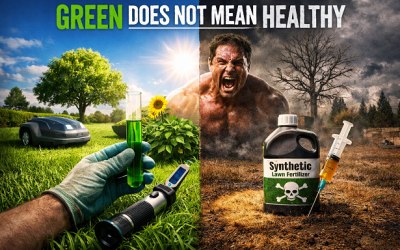
Green Does Not Mean Healthy
One of the most common objections people make when their lawn gets challenged is this: “But it’s green.” That sounds convincing until you stop and think about what green actually tells you. Green tells you there is chlorophyll in the blade. It tells you the plant has...