
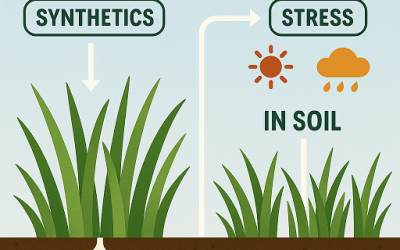
“Phosphorus: The Unsung Hero of Lawn Health – Especially in Times of Stress”
When we talk about lawn care, nitrogen usually steals the spotlight. But there’s another nutrient that deserves some serious recognition—phosphorus. This underappreciated element is a key player in the growth, health, and stress resilience of your grass, and knowing...
“Customer Service Is in the Toilet — And We All Know It”
Let’s not sugarcoat it: customer service today is in the toilet. You’ve felt it. I’ve felt it. We all feel it — because every one of us is a customer at some point during the day. Whether you're picking up a coffee, calling for tech support, ordering dinner, or...
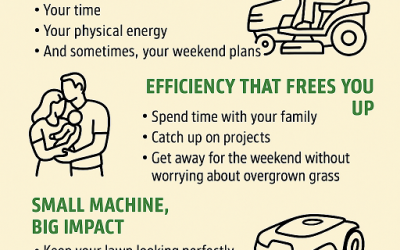
Take Back Your Time: Why Robotic Mowing Makes Sense for Modern Life
Let’s be honest—mowing the lawn can be satisfying for some, but for most of us, it’s a time-consuming chore squeezed into an already packed schedule. What if you didn’t have to mow your lawn anymore—unless you wanted to? Today’s new generation of residential robotic...
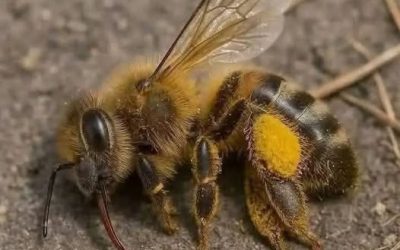
Why I Chose the Biological Path
There was a time in my life when I kept bees. Anyone who has ever tended a hive knows the kind of quiet joy it brings. The hum of life, the rhythm of nature, the sweet reward of honey — it was a connection to something pure and profoundly alive. But that joy was...
What No One Is Talking About
Why Lawn Care Companies Refuse to Go Biological In an age of innovation and environmental consciousness, it's puzzling that most lawn care companies still cling to the old ways—chemical fertilizers, synthetic pesticides, and a schedule designed more for billing cycles...
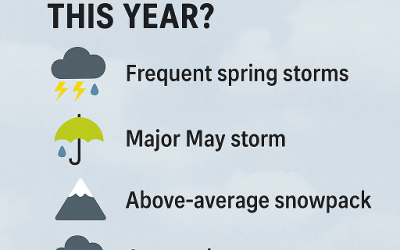
Why is it so wet in Colorado Springs this year?
Colorado Springs has been unusually wet this year—not because the total seasonal rainfall is dramatically above average, but due to several specific weather factors aligning in spring and early summer. Key reasons for the wetter-than-normal feel: Frequent, persistent...

Learn How World War II Formed How You Cut Your Lawn
Ever wonder why most people cut their lawn once a week? If you think it’s because that’s what grass needs, think again. The weekly mow is not a horticultural breakthrough—it’s a cultural habit born out of the post-World War II American suburb. And unfortunately, it’s...
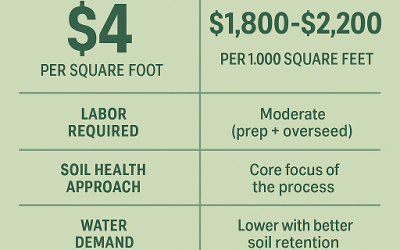
Superseed vs. Sod: A Side-by-Side Cost Comparison
Why Our Superseed Program Can Save You Up to 50% Compared to Sod Replacement If your lawn looks tired, thin, or patchy, your first instinct might be to tear it all out and lay new sod. It’s the “instant fix” people love—until they see the bill. At an average of $4 per...

The Nitrogen Puzzle
The Nitrogen Puzzle Nitrogen (N₂) makes up nearly 78% of our atmosphere, but it’s locked in a form that plants can’t use. Think of it like having a pantry full of food sealed in cans but no can opener. Without the right “tool,” this nitrogen remains out of reach....
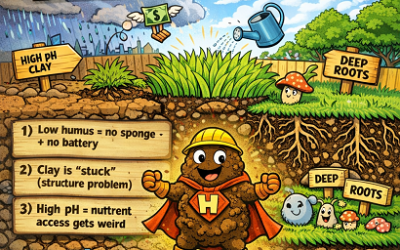
Understanding Humus
When plants and roots die (or drop leaves), tiny soil workers (microbes) eat that stuff. After lots of eating and re-eating, what’s left becomes a dark material called humus. Humus is the part that doesn’t rot fast anymore. It sticks around a long time, helping soil...
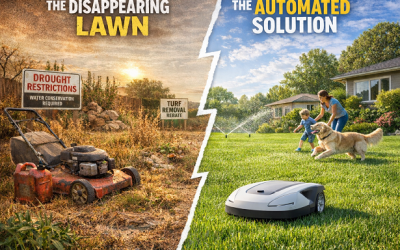
THE LAWN YOU ACTUALLY WANTED (WITHOUT THE WEEKLY MOWING CIRCUS)
Gas mowing is dying. Not because it can’t cut grass… but because it’s an expensive, loud, inefficient relic that keeps getting more costly to operate. Robotic mowing is the opposite: quiet, consistent, ultra-efficient—and it finally fixes the biggest flaw in modern...

The Soil Workforce: Meet the Microbes (and Their Job Titles)
The Soil Workforce: Meet the Microbes (and Their Job Titles) If you’ve ever looked at a lawn and thought, “Why is this one thriving while mine is living on the edge of a nervous breakdown?”—it’s usually not the grass. It’s the staff. Under your feet is an entire...