
Last Updated on August 18, 2025 by Brian Beck
If your Kentucky bluegrass suddenly looks straw-tipped and “burned” a day or two after mowing, you’re probably not seeing mower burn at all—you’re seeing Ascochyta leaf blight. The good news: it’s mostly cosmetic and lawns usually recover quickly with better watering and reduced stress. The better news: you can prevent most outbreaks with a few simple changes.
What Ascochyta Is (and Isn’t)
-
The culprit: a group of fungi in the genus Ascochyta that infect leaves, not the crown or roots.
-
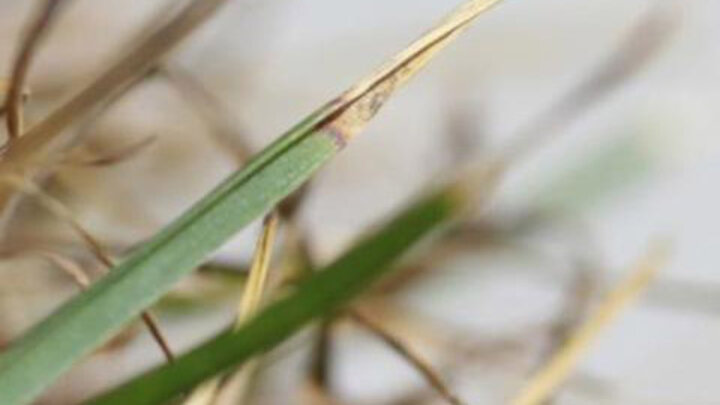
What you’ll see: bleached, tan leaf tips with a sharp line between dead and green tissue; patches can appear almost overnight and often follow mowing lines.
-
What it’s not: typically not a root/crown rot and not a permanent kill—plants usually regrow healthy blades once stress eases.
Why Outbreaks Spike June–August
-
Airborne spores after wet springs. Ascochyta produces spores that spread easily via wind, rain splash, irrigation, and even mowers and foot traffic. A wet spring loads the environment with spores.
-
Heat stress flips the switch. As weather turns hot (June through August), bluegrass under stress becomes susceptible and lesions appear fast.
-
Shallow, frequent watering supercharges the problem. Light daily sprinkles keep leaf surfaces wet, encourage spore germination, and train roots to stay near the surface—exactly where heat and drought hit hardest.
-
Mowing stress compounds it. Dull blades, mowing during afternoon heat, or cutting too low shock already-stressed leaves and make symptoms explode.
How It Affects the Plant
-
Target: primarily the leaf blade. Tips die back, giving a straw-like cast; infected leaves may collapse.
-
Crown/roots: usually remain healthy, so recovery is the norm once new leaves emerge.
-
Speed: symptoms can spread quickly across a lawn but can also fade within 1–3 weeks as plants push new growth under better conditions.
Key Triggers to Avoid
-
Shallow, frequent irrigation → wet leaves + weak, shallow roots.
-
Heat waves following a wet spring → ideal spore and stress combo.
-
Mowing stress → dull blades, low heights, or mowing in peak heat.
-
Thatch and compaction → hold moisture at the surface and restrict airflow/drainage, keeping leaves wet longer.
Prevention & Recovery Playbook
Watering
-
Deep and infrequent: Aim to wet the root zone (generally 0.75–1.0″) in one thorough session, then wait until the lawn actually needs it (usually every 3–7 days depending on soil and weather).
-
Timing: Early morning is best so the canopy dries quickly after sunrise. Avoid afternoon/evening syringing that leaves foliage wet overnight.
-
Check coverage: Fix low/high spots and misaligned heads—uneven water equals uneven stress.
Mowing
-
Raise the height in hot weather (bluegrass tolerates and benefits from a bit more leaf in summer).
-
Keep blades sharp to avoid shredding tips (which look “burned” and invite infection).
-
Mow cool: Mornings are kinder than late afternoons during heat.
Soil & Cultural Health
-
Reduce thatch (<½”): promotes faster drying and better airflow.
-
Alleviate compaction: periodic aeration or soil-building practices improve infiltration and rooting depth.
-
Fertility balance: avoid heavy quick-release nitrogen during heat; feed modestly and focus on overall soil health.
-
Traffic management: limit heavy use when turf is stressed and wet.
Fungicides?
-
Often not needed for home lawns because the disease is leaf-only and short-lived. High-value turf (sports fields/golf) may use preventive programs, but cultural fixes usually outperform curative sprays in residential bluegrass.
How Long Until It Looks Normal Again?
With corrected irrigation, gentler mowing, and reduced stress, new green leaves typically replace blighted tips in 1–3 weeks. Where patches are thin, recovery may take a bit longer—help it along with consistent, deep watering and patient, proper mowing.
Quick Diagnosis Checklist
-
Straw-colored leaf tips with a clean line between dead and green tissue
-
Rapid onset, often after mowing or a heat jump
-
Recent wet spring + light, frequent watering pattern
-
No soft, rotted crowns—plants regrow when conditions improve
Bottom Line
Ascochyta is an airborne, leaf-blighting fungus primed by a wet spring and triggered by summer heat plus shallow watering. Treat the cause, not just the symptom: water deep and infrequently, mow higher with sharp blades, and reduce surface moisture and stress. Your bluegrass will repay you with a quick comeback and a steadier summer color.