
Last Updated on July 30, 2025 by Brian Beck
The Nitrogen Puzzle
Nitrogen (N₂) makes up nearly 78% of our atmosphere, but it’s locked in a form that plants can’t use. Think of it like having a pantry full of food sealed in cans but no can opener. Without the right “tool,” this nitrogen remains out of reach.
Microbes: Nature’s Nitrogen Factory
Enter the unsung heroes of soil health: nitrogen-fixing bacteria. These microbes have a unique ability to “fix” atmospheric nitrogen, converting it into ammonium or nitrates—forms plants can actually absorb.
The process, known as biological nitrogen fixation, occurs naturally when:
-
Bacteria like Rhizobium live in plant root nodules (especially legumes like clover or peas).
-
Free-living bacteria like Azotobacter thrive in healthy soil.
-
These microbes “break open” nitrogen molecules and bond them into plant-usable compounds.
The Symbiotic Trade
Plants feed these bacteria sugars produced through photosynthesis. In return, the bacteria provide a steady supply of natural fertilizer. This elegant partnership reduces the need for synthetic fertilizers, creating a self-sustaining nutrient cycle.
Why This Matters
Relying on synthetic fertilizers is costly and can harm soil biology over time. By encouraging nitrogen-fixing microbes, we:
-
Save money on fertilizers.
-
Build healthier soils that retain water and nutrients.
-
Reduce pollution from nitrogen runoff.
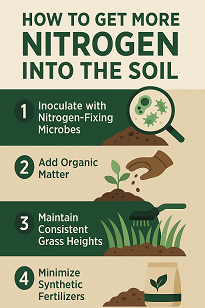
How to Boost Nitrogen Fixation
-
Plant legumes like clover or vetch to attract nitrogen-fixing microbes.
-
Add organic matter to feed soil life.
-
Avoid heavy synthetic fertilizer use, which disrupts microbial balance.
-
Use biological inoculants that jump-start microbial populations.
Conclusion
The ability to turn air into food is one of nature’s greatest tricks—and we can harness it. By working with microbes, we unlock the free nitrogen supply floating all around us, growing healthier plants while restoring life to our soils.