
Last Updated on September 22, 2024 by Brian Beck
The two holy grails in a biological lawn system are the ability to metabolize atmospheric nitrogen and to be able to store increasing amounts of water in the soil due to an increased humus level. I believe that I have achieved both of these this year in my own lawn. Why is this significant? Well that is because if you don’t have to put nitrogen on your lawn you can save some money for starters and if you can hold more water in your soil you don’t have to water as often. These two contributing factors that promote efficiency are what drive down the cost of a biological lawn. There are several others but these are the two main ones as people are addicted to synthetic nitrogen and I don’t know anyone that likes to brag about how much money they’re spending on their water bill.
You see, it is not that we have a shortage of fertilizer going to the lawn but rather a shortage of biology, specifically microbial life in the form of bacteria and fungi. We have been taught to believe that the solution to all of our problems is slicing open a cheap bag of fertilizer, spreading it on the lawn and watering more in hopes that it will rectify whatever malady is afflicting our lawn. This could not be further from the truth. The more synthetic fertilizer that we use on the lawn the less likely it is to get into the soil, to the root and into the plant. That is because there is a law of diminishing returns which applies critically to synthetic fertilizers. In addition to this there are numerous side effects that are associated with synthetic fertilizers that are routinely accepted as normal when they are in reality symptoms of a failing system. These include: compacted soil, thick thatch, massive weed problems, lawn disease, high water bills, heat intolerance in the form of brown spots, the list goes on and on.
As the biology increases in the soil, they do a number of things such as: break down organic matter, increase the carbon content in the soil, provide disease resistance, breakdown inorganic substances in the soil into materials that the plants can use, etc. When you increase the carbon in the soil you increase the water carrying capacity which enables the soil to hold more water. As a matter of fact for every 1% increase in carbon your soil will hold another 613 gallons per 1000 ft.². That’s pretty impressive and this is the exact opposite of what happens in a synthetic lawn.
So why do people like to use synthetic fertilizers? Well that’s pretty simple they are cheap, fast and they give people a fix. The dark side of using them is that there are a lot of side effects which cost you a ton of money down the road. Most people have trouble understanding the biological approach and submitting to its requirements which are pretty simple, don’t you synthetic products, keep the soil hydrated and trust the process. There are a lot of comparisons to the next-door neighbors, what their friend told them and what they grew up watching dad do which I hate to say is largely inaccurate and highly inefficient. There is no comparison between biological lawn and a synthetic one. There are three types of people out there those who trust a biological system, those who are skeptical and take some time to trust a biological system and those who trust a synthetic system and will never adopt a biological system. Unfortunately these people are lost and will suffer the expense and pain of having a synthetic lawn. The greatest challenge of adoption of the biological system is understanding the profound amount of dysfunction in the soil and how it must be repaired to establish efficiency. Once this is overcome the rest is gravy and the prices go down and down and down is the biology becomes more numerous and diversified.
Now to clarify this lawn will eventually need some degree of nutrient input as it is a monoculture. That is a term used in agriculture to define a plant mass of one species, something you don’t witness in nature. They get around this in agriculture by crop rotation which mimics biodiversity that is found in nature. You see while plants compete with each other they also complement one another and push and pull different nutrients in and out of the soil. We obviously cannot do this with our turf lawns which is the primary reason why we need to put additional resources into the soil. In a biological system we do not feed the plant we feed the soil once you reestablish the relationship between the root in the soil with healthy populations of biology you will be able to experience the reality of the biological system.
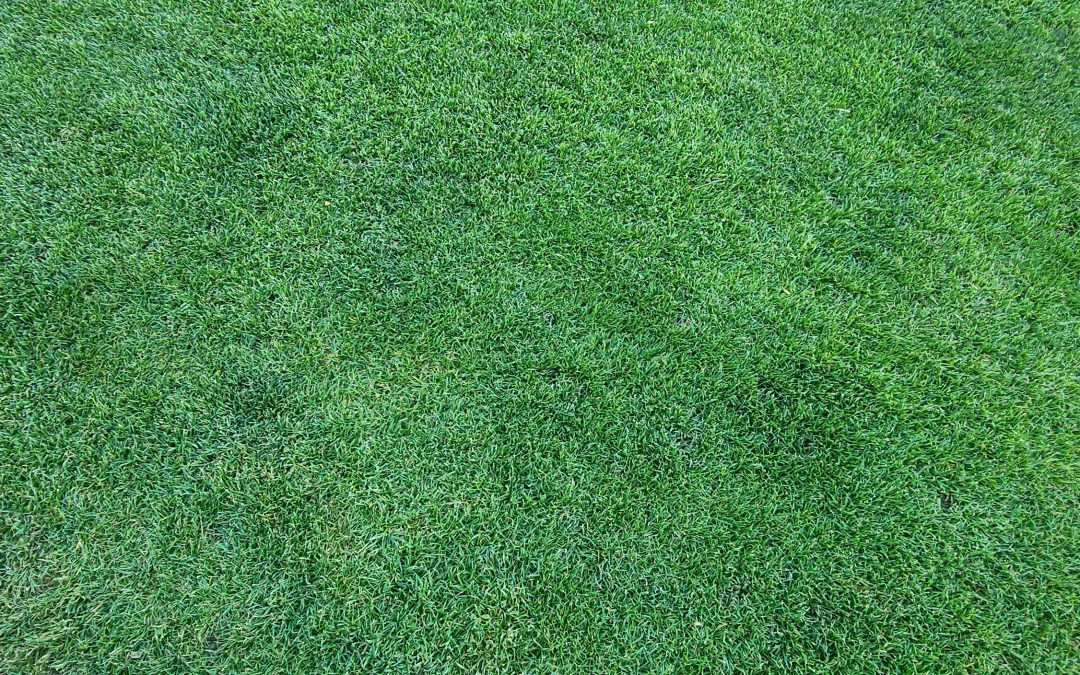
The lawn that is pictured above is a lawn that has received absolutely zero nitrogen this year, only humic acid. It is watered once every 7 to 12 days depending on the heat for about an hour and it retains its color and recovers exceptionally fast whenever it rains, especially when there is lightning associated and that rainstorm as it contains nitrogen. This is the epitome of a biological lawn and this is why we chose to adopt it back in 2018. The program continues to get better and better and the lawns become more and more efficient. We have made many improvements with our program this year and they are paying off.